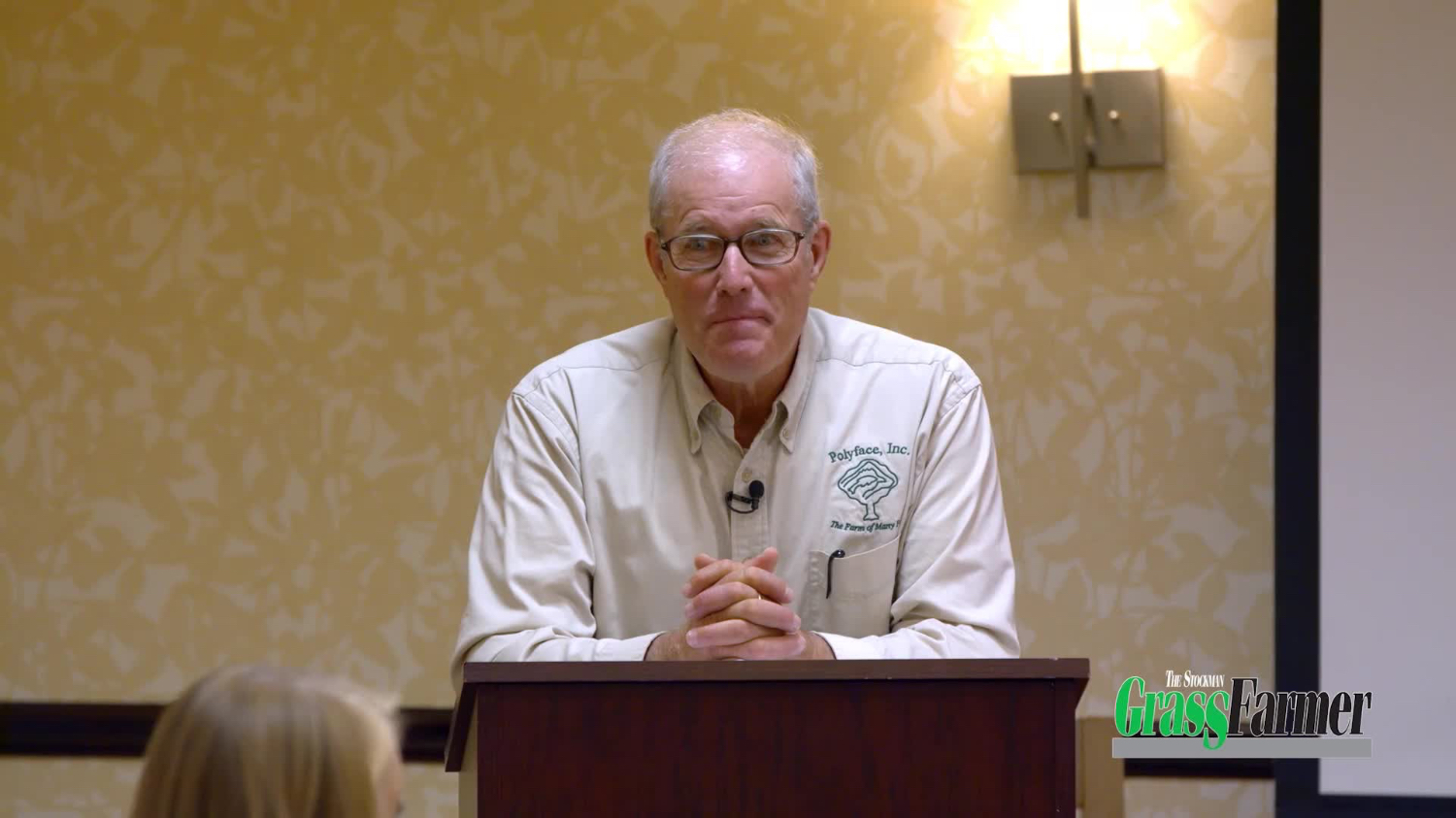
In this episode of Regenerative Wisdom, Steve Kenyon challenges an idea he was taught years ago in college—that it takes 100 years to grow an inch of topsoil.
After more than 25 years of working with livestock, plants, and soil health, Steve has come to a very different conclusion: with the right management, we can grow soil much faster.
In “Growing Soil,” Steve takes us below the surface to explain how carbon sequestration, living roots, soil biology, and grazing management work together to build soil. He also shares results from his own Alberta ranch that demonstrate just how dramatically soil can change under advanced grazing management.
At the heart of Steve's approach is a simple shift in thinking: instead of focusing only on growing plants from the soil, what if we focused on growing soil from the plants?
🔑 Key Points Covered
Why Steve challenges the idea that it takes 100 years to grow an inch of topsoil.
The difference between leaving plant residue on the surface and building soil through living plants and roots.
Why carbon sequestration is central to Steve's approach to growing soil.
The three processes Steve identifies as essential: photosynthesis, exudation, and biological conversion.
How plants capture carbon from the atmosphere and convert it into glucose.
Why root exudates are important for feeding soil biology.
How the relationship between plants and soil organisms helps cycle nutrients and build stable soil carbon.
Why increasing soil carbon can improve water-holding capacity, fertility, and soil structure.
The role of Arbuscular Mycorrhizal Fungi and glomalin in Steve's explanation of long-term soil carbon.
How plant roots and soil biology help turn sand, silt, and clay into functioning soil.
Why capturing more sunlight with a full canopy of living plants can increase carbon sequestration.
The importance of keeping living roots in the soil for as many days of the year as possible.
Why Steve believes graziers should strive to keep pastures in a growing, vegetative stage.
How improving the water cycle becomes especially important in dry environments.
The results Steve has observed after years of advanced grazing management on his Alberta ranch.
How his Five G.R.A.S.S. Concepts provide the management framework behind those changes.
Why regenerative agriculture should be viewed as a whole system rather than a recipe.
🌱 Three Steps to Growing Soil
Steve breaks carbon sequestration into three basic processes:
1. Photosynthesis Plants capture carbon from the atmosphere and use sunlight to turn it into glucose.
2. Exudation Plants send a portion of those sugars through their roots and into the soil, providing food for soil biology.
3. Biological Conversion Soil organisms use those root exudates, with some ultimately contributing to longer-term stable soil carbon.
For the grazier, Steve says the job is to manage the tops of the plants so the roots can continue doing their work underground.
☀️ Capture More Sunlight for More Days
If the goal is to grow soil faster, Steve says producers need to sequester more carbon each day—and do it for more days of the year.
That means maximizing the amount of sunlight captured by green, growing plants rather than allowing it to hit bare soil or be reflected away.
It also means extending the growing season whenever possible.
Can you maintain living roots in early spring? Late fall? Can your pasture remain vegetative longer? Can you capture sunlight and feed soil biology for 200 days? Or even 300?
Steve's goal is to keep living roots working and feeding the underground system for as much of the year as the environment allows.
📊 The Proof Is in the Puddin'
Steve shares two examples from his Alberta ranch to demonstrate what he says can happen under advanced grazing management.
In a research project with the University of Alberta, two pastures with similar histories, topography, and soil types were compared. Steve's pasture had been under regenerative grazing management for 15 years, while the other had been continuously grazed.
Steve reports that his pasture averaged 11% soil organic carbon, compared with 5.2% in the continuously grazed pasture. His side also had a distinct dark soil horizon averaging 10.8 inches deep.
A second pasture demonstration compared soil samples taken in 2006 and 2023. Steve reports that soil organic matter increased from 2.6% to 7.1% over those 17 years, along with the development of approximately 6 to 12 inches of dark topsoil.
For Steve, these results demonstrate that management can dramatically influence the rate at which soil develops.
🌾 The Five G.R.A.S.S. Concepts
Steve credits much of the change on his ranch to managing a perennial polyculture using his Five G.R.A.S.S. Concepts:
Graze Period — Manage how long livestock remain in a grazing area.
Rest Period — Give plants adequate time to recover before being grazed again.
Animal Impact — Use livestock as a tool to influence plants and the soil surface.
Stock Density — Manage the concentration of animals at a given point in time.
Soil Armor — Keep the soil protected with living plants and plant residue.
Together, these concepts help Steve manage the plants above ground while encouraging roots and soil biology to do their work below ground.
👨🌾 About Steve Kenyon
Steve Kenyon ranches in Busby, Alberta, Canada, where he has spent decades developing and teaching practical grazing strategies through Greener Pastures Ranching.
His book, The Calendar of the Year-Round Grazier, is available through the Stockman Grass Farmer Bookshelf.
📅 Learn From Steve Kenyon In Person
Want to take these principles beyond the podcast?
Steve will be teaching the Year-Round Grazing School in Omaha, Nebraska, November 6–7, 2026.
Join Steve for two full days of practical, field-tested, profit-focused grazing education designed to help you improve your grazing management and build a stronger operation.
Seats are limited, so early registration is encouraged.
Learn more and reserve your seat at stockmangrassfarmer.com.
🎧 Listen, Learn & Subscribe
If you enjoyed this episode, subscribe to Regenerative Wisdom for more practical lessons and timeless insights from the farmers, ranchers, and grazing experts featured in Stockman Grass Farmer.
📌 Be sure to check out our monthly magazine, live events, books, online schools, and the latest specials for even more resources to help you build healthier soil and a more profitable grazing operation.
“Before You Go...”
🎓 Free Lesson from The Grazier’s Marketing School 🌿
Want to sell more farm products without feeling pushy or overwhelmed? Start smart—with Lesson 1: “Why Direct Market” featuring Joel Salatin—100% FREE.
Inside this powerful first session, you'll discover:
✅ Why direct marketing is more secure than commodity sales ✅ How to transform customers into raving fans ✅ What most graziers completely miss when trying to sell
This lesson is your no-cost gateway to marketing that works on your terms—whether you’re just getting started or ready to sharpen your strategy.