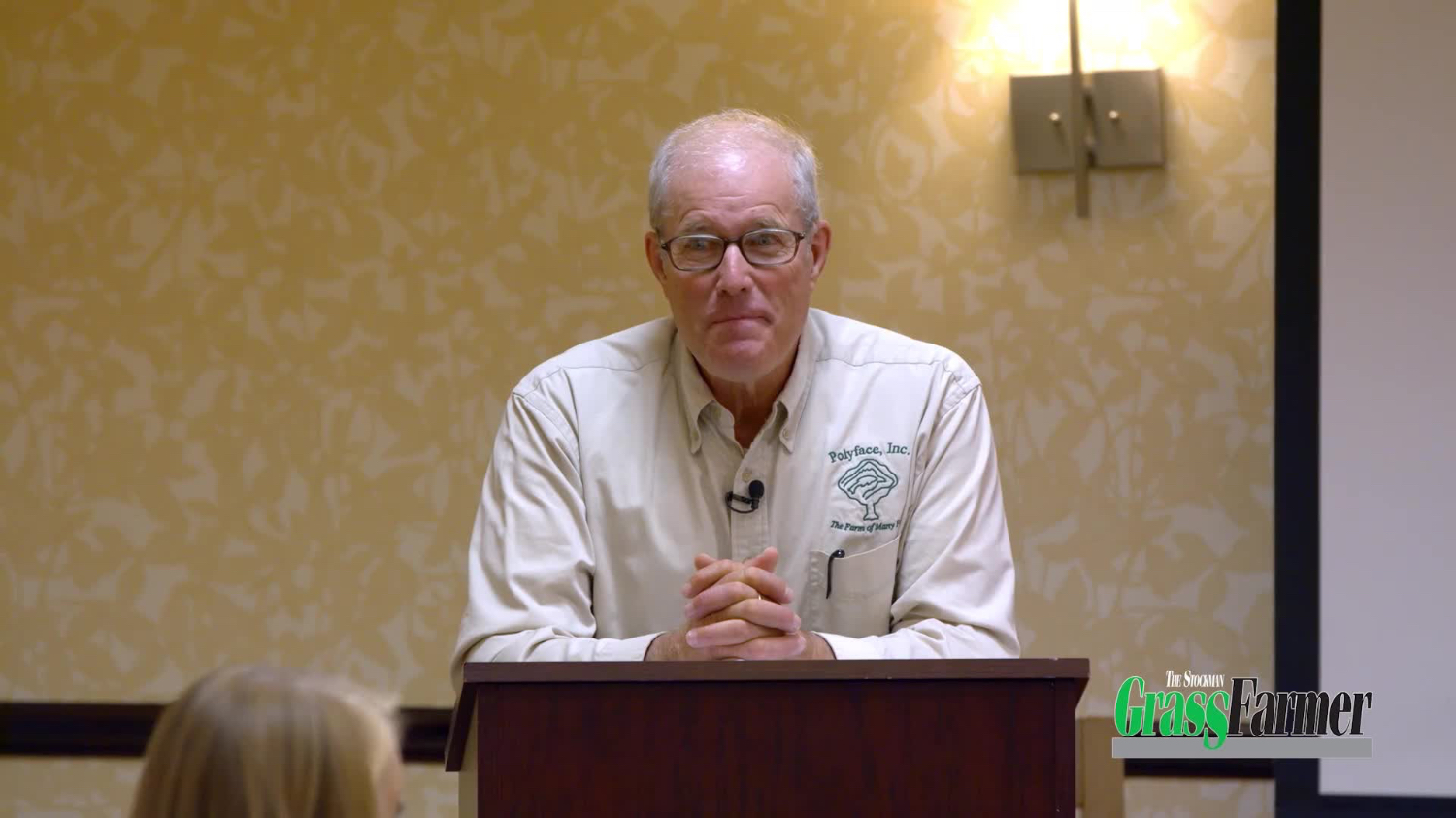
Okay, I'm here today with Alan Williams, who happens to be in Australia at the moment. And we're going to talk about the horrible ice storm that he and his family and the farm went through in, that was in February, right?
Okay, so go ahead. Well, thank you, Carolyn. And yes, it started, you know, the storm started in late January and extended into February. And it was, you know, of historic proportions where we are located.
And I want to emphasize that because there's a lot of people that, you know, did not experience, you know, the severity of the storm that we did, even right there in Mississippi. You know, it was very much a definitive band that came through, and we just happened to be in the hardest hit county in the state, you know, where the storm was at its most intense.
It was, you know, I've been through many ice storms in my life. So the predictions, you know, from the National Weather Service that we were going to have yet another ice storm in Mississippi were not alarming or surprising.
You know, as you know, that often happens. And, you know, they were saying that it had the potential to be bad. Now, their bad was an inch plus of ice, which is bad. We've all lived through those. We know how crippling they can be.
And as a matter of fact, on the National Weather Service ratings for ice storms, they do call one inch of ice crippling. And we know that one inch can take down power lines, lots of tree limbs, and even whole trees and things like that, and clot, you know, prevent travel on roads and so forth.
So for more than a week ahead of time, we did everything we knew to do. Again, having experienced ice storms before, we did everything that we knew to do to prepare. And as you're aware, you know, everything that we have is out on pasture, you know, all of our bigger livestock, you know, when you talk about cattle and sheep and pigs, but then all of our thousands and thousands of poultry are out on pasture in portable housing that is moved every day.
But again, we did everything we knew to prepare. We filled agtotes with extra water. We made sure our propane tank for Generac runs our cold storage units for all of our meat storage and our brawler brooder and all of that.
We made sure that that propane tank was full. We had a couple of spare portable generators at hand. We filled up all of our gas tanks and diesel tanks, you know, just everything that you can think of that you would normally do for storm prep, we did.
But what actually happened to us was far, far different than what we anticipated. It started on a Friday evening, and by the early morning hours, I was already hearing sounds like cannon going off. And I immediately, having been through ice storms before, I immediately knew what that was.
That was trees, big limbs coming down and maybe whole trees coming down. It was pitch black, dark. We didn't know. But I knew what it indicated. And sure enough, shortly after I started hearing the sounds of, you know, again, what sound like artillery fire or cannons, the power went out.
So there we were. And I was like, oh, wow, it's going out early. So, and of course, temperatures were sub-freezing. And it was raining hard. So it was all, we got all freezing rain, all freezing rain.
And it was raining hard. And we had thunder and lightning. So it was very similar to an intense summer thunderstorm. You know, the rain coming down hard, thundering, lightning, all of that occurring.
So again, things we're used to, but what we weren't used to was the duration and intensity of this storm. So it kept coming all day Saturday and then intensified dramatically Saturday evening into Sunday.
And that is probably what shocked us is that we had had all of this rain, freezing rain, all day Saturday, and it had kept building up and building up on everything and coating everything. And then it actually intensified Saturday evening.
And if you looked at the radar, those bands turned from a dark red even to a purple, like you would see in an intense hailstorm, except it wasn't hailing, it was freezing rain. And so we knew it was getting worse and worse.
And when we woke up Saturday morning, my son and I and his wife and their two young children, aged two and two months, we were all trapped. We were not getting out. And we knew it when we woke up Saturday morning.
There was no getting out of this. So all of us were trapped there at the farm until whenever. We had no idea when we would be able to get out. So we did have that realization and we started running the portable generators to their house.
We were able to keep the house with the portable generators a nice balmy 42 to 45 degrees. Wow. Yeah. And that was the warmest we could get it, you know, with the portable generators and little portable heaters.
But we did the best we could. Of course, the generac for our cold storage, for all of our meat inventory and our brooders, we had 800 to 1,000 chicks in there. You know, at the time, the Generac did kick on and all of that was running.
So we were okay there, or so we thought for a while. But when we woke up Saturday morning, it was a surreal world. It was beautiful, you know, because everything, everything was glistening in the sun.
I mean, you know what it looks like when absolutely everything is coated in ice. So it was surreal, it was beautiful, but it was also scary and deadly. And from Friday night through Monday, it was like we were in constant warfare and we were being shelled by artillery nonstop because of the trees cracking and popping and falling and even exploding.
This is one thing I've never seen before, Carolyn. I've never seen trees explode like they did. And we had a number of trees and we even saw it like down Highway 30 in different places that it looked like somebody had stuck sticks of dynamite into inside the trees and they exploded internally.
So that's one thing that I had never experienced before. We got on Saturday and Sunday. It was impossible to get out and to get Chris's wife and kids out. The roads were coated. By Sunday, we were coated in more than three inches of ice.
And we measured this at multiple places on the farm. So we know what it was. We're not speculating here. We did measurements. That's triple, triple what I have ever, ever experienced before. I've experienced an inch or so of ice, but never three and a half inches of ice before.
I looked it up and that would be equivalent to on a single tree more than 12 tons of ice on a tree. Yeah. And if you can imagine taking a cement truck and pouring cement over all of your buildings, all of your vehicles.
You know, we have the Conax storage containers on the farm as well, and just pouring three and a half inches of concrete over all of that and completely encasing or entombing that building, that container, your vehicle in three and a half inches of concrete.
That's what everything was like, literally. And a pickaxe and hammers became our best friend. We could not get into any building, any container, without first beating three and a half inches of ice off of it, you know, so that we could just simply open doors and even up the ground, you know, because we had the three and a half inches of ground, you know, and so we had to not only beat it off of the area around the doors,
but we had to chip it off of the ground so that the doors would open. So, you know, things that we had never experienced before and were completely unused to. The cattle and the pigs were literally walking on top of the ice.
The ice was so solid, they were not breaking through as they were walking. So that obviously meant that there was no way for anything to graze or forage, right? Because there was no way to get through that ice to any forage trap below.
So everything had to be fed during that time period. And it took us 10 plus days to thaw out. The county cut our water off the first evening. And I know they did that to try to save and preserve, and I understand that.
But, you know, so we rely half the farm works on county water, the other half on our well. But of course, the well works on electricity. So when power went out, we lost the well and we lost the county water.
So now Chris and I were wearing chest waders and going into our ponds, busting ice on the ponds and dipping water out in five-gallon buckets to be able to water all of our livestock and all of our poultry.
How many days did you have to do that? Five or six days in a row. Yeah, yeah, that we had to do that. And one of the things that we were most concerned about, you know, we have thousands of poultry, brawlers, laying hens, all of that, out on pasture in the portable units.
And all of those portable units and on the laying hens, those are a thousand bird units. Each house holds a thousand birds. In the brawlers, each house holds about five, 600 birds each. And they're all covered in the tarps, right?
Now they're tubular steel structures and all of that, but they're covered in the tarps. So we knew that if we didn't keep removing ice from the roofs of all of our poultry houses, that it would very quickly collapse them.
And then we would have all of those birds immediately exposed to the elements. So one of our biggest tasks multiple times a day, every day, and it was a physically exhausting task, was to keep clearing the ice off of the roofs of all of our portable poultry housing.
So from the moment we could see in the morning until you couldn't see at dark, you know, Chris and I were out there. We had to be out in it. You know, we had no choice. So we were out the entire time every day in the midst of all of this, you know, just trying simply to keep animals fed and watered, keep them alive, keep the roofs of the poultry houses cleared, beat ice off of all our buildings so we could get in and get supplies.
The little things that you take for granted that you don't have to worry about doing every day on a normal day now became huge, time consuming and exhausting tasks. You know, we were drinking bottled water and eating cold food during this time as well and trying to take care of a two-year-old and a two-month-old.
You know, Chris's wife, Devin, was, you know, totally consumed with trying to, first of all, keep the kids warm, you know, and then keep them fed and clean and all of this. So it was just, you know, again, a lot, a lot of things you don't think about.
We, on day five, one of Devin's uncles was finally able to make it in and to pick up her and the children and get them out. So we were thankful for that. But of course, Chris and I had to stay on and to continue to care for everything.
By day four, because of having to run generators 24-7, we were running desperately low on fuel. And it was still way, way below. And as you know, we had record cold temps in Mississippi during that time.
And we were consistently in the single digits and even below zero for a couple of nights up where we were. So that it never ever got above freezing. So things didn't even begin to thaw. And Chris is also a volunteer first responder, so he has a ton of experience in that regard.
We got out on one of our UTVs. That was the only way we could get off the farm and just started exploring. Could we get anywhere to get fuel? And there's only two directions to go from the farm. We're on a county road.
And in either direction, there were live power lines down across the road and just countless trees. And even yet today, when anyone drives down Highway 30 between New Albany and Oxford, Mississippi, you still see the clear, clear evidence of the extreme destruction.
There's not 100 yards of Highway 30 that doesn't have whole trees that the tops have been cut off of them and they've been literally just pushed to the shoulders of the road. They still haven't had time to clear all of that.
So again, for anybody that wasn't there, they can still see the evidence just simply by driving down Highway 30. And if they weren't there, they've got to wonder, oh my God, what in the world happened here?
So Highway 30 was a huge mess. And of course, none of our employees could get in during this time, right? We couldn't get out and they couldn't get in. So they were, you know, it was just Chris and I.
We had no other help. And, you know, so all the work on the farm was now relegated to two people. So what did happen, though, Carolyn, was this. You know, this is we prepared or thought we did. We prayed, you know, everything.
We were not spared the storm. The storm was not deviated around us. You know, we weren't even spared the intensity of the storm. We were in the hardest hit area of all of Mississippi. And to attest to that fact, more than 30 people in the county, Lafayette County, lost their lives during this storm.
So it was a deadly storm. So, you know, that's more people than Lafayette County has lost in tornadoes. Yeah, so this was more deadly than a tornado. But what we did discover was that, you know, and my son and I both went back to Psalm 23, you know, yea, though I walk with you through the valley of the shadow of death, right, I will be with you.
And what we discovered was that was the case, you know, that even though we were tested, we were tried immensely. We were physically exhausted. We were mentally. It's been a long time since I've been that mentally exhausted and just sheer dejection.
When you looked around and saw the level of destruction, you know, we did lose birds, you know, in spite of all of our efforts. And that was like a huge gut punch to us because we felt like we were doing absolutely everything.
We felt like we were sacrificing ourselves to save these birds and other animals. And we did have some losses. And it was just a huge gut punch to us. But through all of that, we kept noticing that, okay, as tired both physically and mentally as we were, our strength kept being renewed.
And we could go on the next day and the next day. The other thing is that there are countless incidents that occurred of what I can only term 11th hour rescue. Okay. 11th hour rescue. Just like on day five, when it was getting pretty darn hard to continue to take care of those kids in a house that never got above 45 degrees and with a two-month-old, somehow, some way, Devin's uncle was able to get in,
you know, and get them out. We were running desperately low on propane and we could not get propane. We called, we begged, we pleaded, and of course, even getting into us was perilous. But the propane was being relegated, and I 100% understand this and will not complain about it.
It was being relegated to the hospitals, the nursing homes, the elderly, things like that. And I'm like, absolutely, absolutely. But our propane kept running lower and lower. We had those thousand or so chicks in the brooder that we knew if that generator went off within an hour, they would be dead, all of them.
And we knew that we risked losing many tens of thousands of dollars worth of meat inventory and things like that. So it was, you know, we were getting pretty scared about that. And it did, we ran the tank out, the generac did turn off.
And we were just devastated because we knew what was coming and we knew the additional losses that were coming. But again, at the 11th hour, literally within the hour, a propane truck shows up. I can't explain it.
I can't explain it. But it just shows up, fills us up. And, you know, neighbors came to our aid and we went to their aid as well. You know, we shared any spare fuel we had. We had run out of gas for the generators for the house and other things.
And we were finally able to driving 15 miles an hour in a four-wheel drive truck. We were finally able to get out. We had to go all the way to Tupelo to get fuel. There was none to be had in Oxford or New Albany.
So we had to go all the way to Tupelo and back at a snail's pace to get fuel, but we were able to do that. So, you know, all of that occurred. And again, 11th hour, you know, with all of that. Another thing that happened is after the roads, after the ice did melt some and they were able to do some clearing of the roads, we had a friend in Oklahoma who brought us a big generator all the way from eastern Oklahoma that we could hardwire into Chris's house so that the house now could be run again,
could be operational again, and we could at least be warm again because we hadn't been warm this entire time. And so it was just example after example like that. And then Carolyn, we had more than a thousand people respond to us from all over the world, all over the world, that just said, hey, we're with you, whatever we can do to help, if you need help, equipment, whatever, and the massive cleanup that has to come after,
you know, because we've got countless trees down and trees on fences, everything else. But the outpouring of love, support, everything was just phenomenal, phenomenal. It made up for the worst of it.
It showed us, it proved to us that people can step up in a time of need, you know, and step up with generosity that is far above and beyond anything you can ever imagine. You know, so it was profound.
Now, what it drove home to me was several things. One, when you believe you're prepared, go further. Have more fuel, more generators, more equipment on hand, you know, chainsaws filled with fuel, you know, everything.
Have more ready than you believe because never underestimate the intensity of storms that are hitting us today. Okay. Second lesson that we learned is that we need to rethink our portable poultry housing and how well it can stand up structurally to storms like this and how we handle it.
And we've already been batting around a bunch of different designs and things like that to be able to hopefully accomplish that. So we're working on that. And of course, we've got some structures to rebuild.
And oh, by the way, and I know this seems unreal, but it is absolutely real. Just a week ago, or a little over a week ago, we were hit unexpectedly at the farm by tornadic weather. And it was at 10.30 at night.
We had an intense hailstorm and all of that. And then when my son got out that evening to check on things, we had four poultry houses that were taken up, lifted very high in the air, completely mangled.
Some were thrown just over fences without, not through the fence, because fence was unharmed, thrown over fences and some into trees. And these are not small poultry houses, right? I mean, they're housing 500 or 1,000 birds each.
And of course, the four houses that were hit, it killed all of those birds. So we had that second storm. And I know it seems like, wait a minute, how could this happen in part that you're hit by two storms?
But it did. And you know what? That's okay. And we will just rebuild, repair, and go on. But, you know, we've learned to be more intense, more intentional on your storm preparation. Always prepare for something beyond what it's predicted to be and what you think it will be.
Have far more fuel on hand than you believe you ever need because it could take far longer. Have enough generators on hand. Again, all of those things. We had to be super careful about getting into trees and, you know, because a tree or a power line could come down at any moment.
So we had to be very cognizant that we were never driving or walking or moving around any trees, right? While we were on the farm. The second thing, second lesson, we've got to do more. I thought we were doing a lot relative to creating awareness of regenerative agriculture and growing this whole movement.
But we've got to step up our efforts. Our efforts haven't been enough. We've got to do even more because that's the way we're going to moderate our weather again. You know, that's the very best opportunity we have to moderate this weather is to create true landscape scale regenerative impact.
So it has renewed my passion and vigor for doing even more to teach, train, educate, equip others, and to create consumer awareness because consumers are going to be critical in driving this. Absolutely critical.
We're less than 1% of the population in the U.S. We don't hold any power. We don't hold any sway, you know, but the consumers, the other 99% do. And so that's also now going to be a renewed focus is working to educate the consumer so that they can, through their purchasing power, through their voting power, they can influence what happens with food and fiber companies and the decisions they make.
They can influence our policy in Washington. They can influence the farm bill, you know, all of this. So I'm going to intensify my efforts even more because of this experience and the desire to not have anybody else have to go through what we had to go through here.
So all those things are things that we are definitely going to implement and intensify in terms of what we're doing. The third thing is that I realize to be able to train, equip, educate others to a more effective degree, we've got to have more of us out there doing it.
Right. So I've got to step up my efforts to train the trainer, so to speak, and equip others to be able to effectively train, educate, and equip others. So I'm definitely doing that. And to one of the things that we're now going to do, Carolyn, is we're going to launch a regenerative university, a program that allows us to be able to thoroughly equip and train young people or anybody.
It wouldn't be relegated just to young people, but second career folks, whoever, to train, educate, and equip them to be able to be effective as regenerative farmers and ranchers, to be effective at educating others, to be effective if they want to go to work in our universities, in NGOs, in government, whatever, in corporations.
We need to have people that have this regenerative knowledge of ag and food. And so we hope to launch this in September with our first class. It'll be a two-year program with full everyday boots on the ground practical training, coupled with an elite cast of rotating faculty who will be doing the classroom education during those two years as well.
So we already have an incredible group of folks that have said, yep, I'm on board for, you know, being our faculty. So I'm very excited about that and the opportunity to be able to accomplish this. And here in Australia, I've already had a lot of people here in Australia that said, sign me up.
We want to come. We want to be a student. So the response has already been pretty phenomenal. I feel like we'll get far more applicants than we can house and train at any one given time. But I'd rather have more than less.
And we now know that those applicants are going to come from all over the world. That's great. Is it going to be in Mississippi or where is it located? Well, we will have, we're going to have two locations.
We'll have one in Mississippi and one, we have a farm in western Massachusetts. The other initial one will be there, but we will be establishing additional ones. So you have to have a real farm that is a regenerative farm operating and operating profitably.
You know, these are not going to be nonprofit farms because we believe a real education has to come from a real farm that is clearly demonstrating profitability in the enterprises. So these will be real operational for-profit farms.
And we will be establishing these regionally across the U.S. so that we can accommodate and train as many students as possible. Great. Well, that's wonderful. I'm glad that there was some diamonds came out of the rough.
Yep. Yeah. And it's all going to help other people from what you had to go through. And thank you so much for sharing that. There's an abbreviated reversion. It's going to be in the March issue of the Stockman Grass Farmer.
And I'm sure that we will still be a vehicle for you to keep the word out about regenerative agriculture. So continue to read the Stockman Grass Farmer, the digital, and the print version. So thank you, Alan.
Thank you very much. I appreciate the opportunity to share our story. And I just want to leave everybody with this. In the midst of the storm, there is hope. There's real hope. And we have been shown this and showered, literally showered with love, with support, with generosity.
And that's how this regenerative community responds. Thank you so much. Okay.