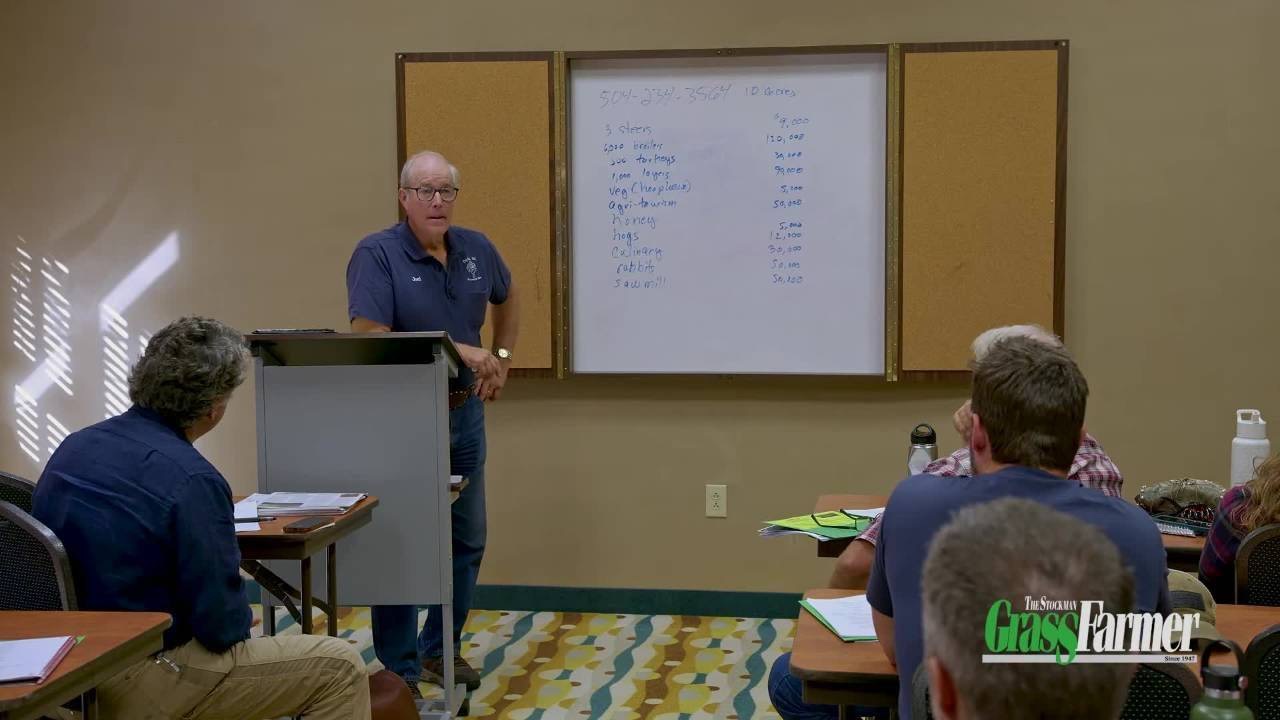
The Grazier's Marketing School - Why Farmers Should Direct Market
Joel Salatin passionately advocates for direct marketing as an essential strategy for small farms to achieve stability, viability, and purpose. He outlines both practical and philosophical reasons why farmers should control more of the value chain—beyond just production—and how doing so can enhance financial security, build community, attract talent, and create long-term legacy businesses.
Salatin also acknowledges the emotional and logistical hurdles farmers face with marketing—fear of rejection, distaste for sales, aversion to self-promotion—and offers strategies like collaboration, value-adding, and events to help overcome them.
🔑 Key Points:
Why Direct Market?
- Diversifies income beyond production, which is the only phase vulnerable to nature’s volatility (weather, pests, disease).
- Increases business stability by tapping into processing, marketing, and distribution.
- Historical norm—local commerce has been the backbone of secure food systems.
- Attracts the best and brightest—encourages intellectual engagement and creativity in farming.
- Customer base is portable—valuable if working on leased land.
- Emotional support—customers become cheerleaders and supporters in hard times.
- Viable business = two salaries—helps build sustainable and legacy-oriented operations.
Barriers to Direct Marketing:
- Farmers often dislike people, making customer interaction a challenge.
- Fear of rejection and emotional vulnerability because products are deeply personal.
- Peer rejection—standing out in the community can feel isolating.
- Self-promotion discomfort—many farmers feel uneasy “selling themselves.”
Strategic Insights:
- Marketing ≠ Sales – marketing is the strategy, sales is the execution. Find partners who excel at sales.
- Don't aim to be the highest-priced—price fairly to scale impact and compete with industrial players.
- Don't try to do it all—focus on collaborations to round out offerings.
- Customer acquisition is expensive, so maximize customer value with diverse offerings.
- Events, tours, and infotainment can create loyalty, attract new buyers, and enhance farm visibility.
✅ Action Points:
For Immediate Focus:
- Develop a marketing strategy (even if you won’t do the selling yourself).
- Identify complementary partners—veg producers, value-add artisans, or food crafters.
- Offer more to existing customers (e.g., collaborate to provide eggs, chicken, preserves, soap).
- Start small and test ideas—don’t worry about scaling right away.
Collaborative Ideas:
- Consignment or wholesale agreements with local artisans to build a one-stop shop.
- Use commission-based sellers to grow sales without fixed payroll risks.
- Host low-risk events: tours, workshops, concerts, classes (cheese-making, fermentation, cooking).
Value-Adding Strategies:
- Salvage cuts like necks, feet, and gizzards for broths or pet food.
- Consider snack sticks, bone broth, pot pies, soups, or ready-to-eat meals.
- Bundle with farm experiences—dinners, tours, field days to deepen engagement.
Infrastructure & Hospitality:
- Invest in clear signage, simple facilities (like porta-potties or compost toilets), and welcoming areas (e.g., picnic tables).
- Create child-friendly spaces (e.g., corn box, swings) to encourage family visits.
- Make it photo- and share-worthy to encourage social media buzz.