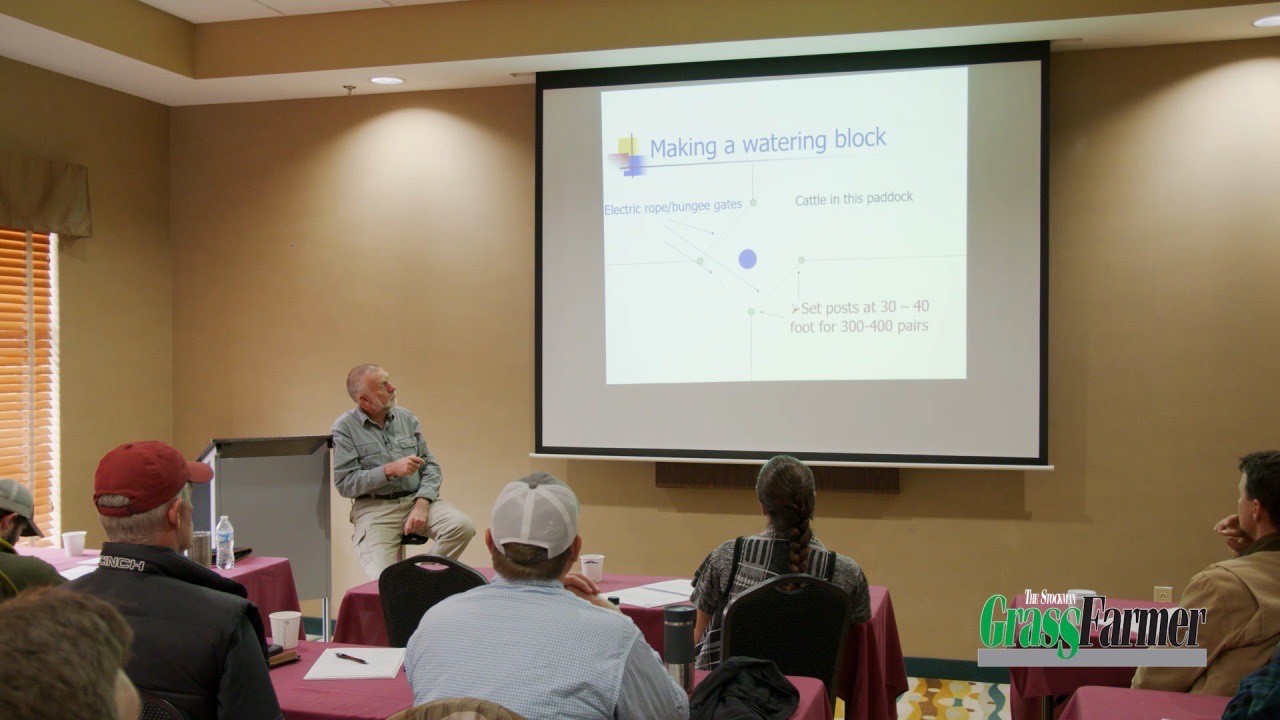
“What Got You Here Won’t Get You There” Featuring Joel Salatin
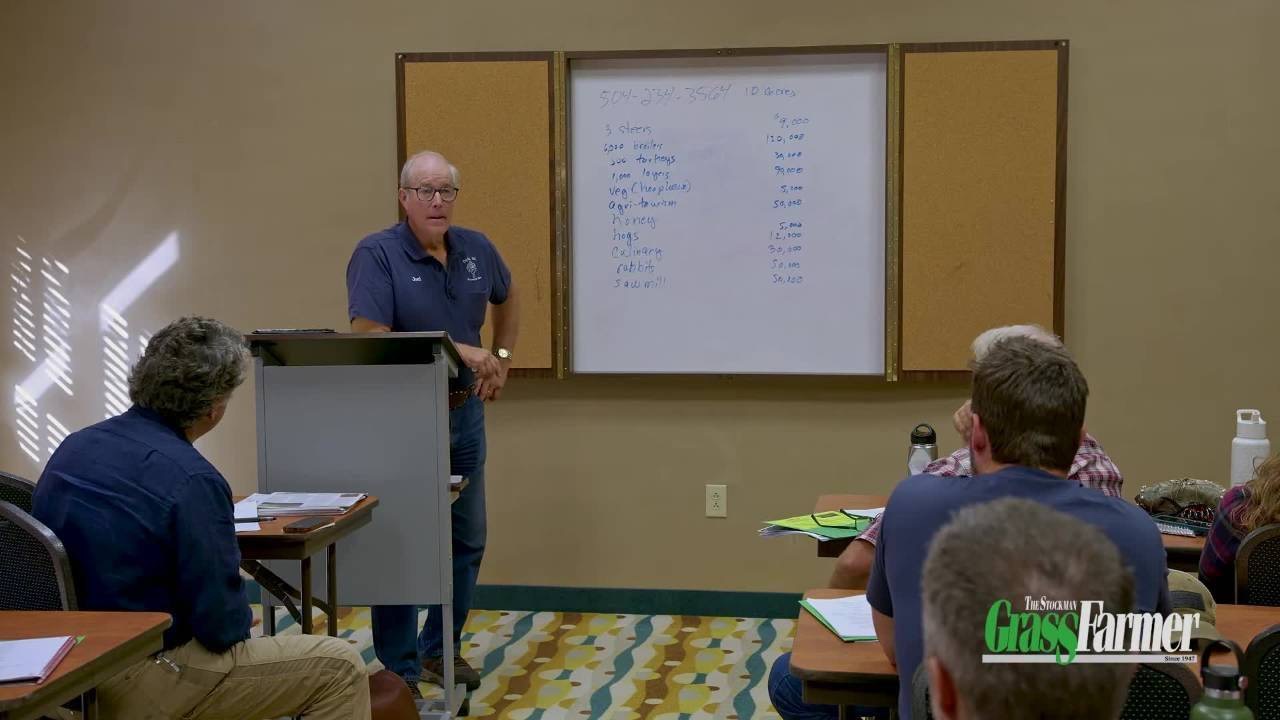
If you've ever wondered why doing exactly what worked for the previous generation no longer guarantees success, Joel Salatin has a compelling answer.
In this excerpt from both our YouTube channel and the Grazier's Marketing School, Joel walks through a simple but powerful illustration of how dramatically the economics of farming have changed over the past 60 years. His conclusion is straightforward: what got you here won't get you there.
Using real numbers, personal stories, and observations from decades of farming and direct marketing, Joel explains why adaptability—not tradition alone—is becoming one of the most valuable assets a grazier can have.
...
What got you here won't get you there. Probably one of the most my 30-second soundbite when I explain this to somebody, especially an urbanite who doesn't know anything about farming, is that in 1961, when my parents bought the farm that we're, the core of the farm we've added to it, but when they bought the initial little acreage where we were, where we are, 90 bucks an acre, 1961, 90 bucks an acre.
Feeder cattle, a feeder calf, so a stalker, would sell at that time for about $180. And you could grow roughly half of one on an acre. Half of $180 is $90. Good. All right. We're all good here. Okay.
$90. What did I say we bought the land for? $90 an acre. That is a ratio. That is a market value to production. And that's not direct marketing. That's just selling at sale barn. Okay. That's a ratio of one to one.
Everybody visualize this one to one ratio. Today, $7,000 an acre, that stalker calf, yep, boy, they've gone up too. Man, we're so glad they've gone up. They've gone up from $180 to $700. Okay. But we still get the same amount of sunshine, same amount of rain.
So that acre grows still half a stocker calf. And I know we can do more with controlled grazing, but that's not the point here. I'm just trying to do the basic stuff. All right. So we got a half a calf.
Half of 700 is 350. Now, this will really test your mental math here. So the land was 700. Now we're 350. What's that ratio? 20. Yeah, boy, Michael's on it. Yeah, I got my math whiz already picked out.
All right. 20 to 1. So think about that. In 60 years, we've gone from a market production ratio of 1 to 1 to 20 to 1. That's why what got you here won't get you there. That's why you can't just do what grandpa did.
And that's why it's frustrating to see so many of these conventional farmers trying to beat the system, doing exactly what their second, third, and fourth generation, what their ancestors did without change, and it doesn't work.
It doesn't work because context change, geopolitics change, society changes, economics changes, all sorts of things. I mean, the old, I mean, when I was a kid, I remember well all the old timers around us.
They talked about in the 1950s, you know, I went down here. We bought this, got this 100 acres over here. We planted some barley and raised some cattle on it. And I mean, we paid for that place, you know, in two years.
And it made a living and it was a good living, you know, on that. You can't go down now and buy 100 acres, plant a little barley, and take some calves off of it and pay for it. I had another old timer, he told me, he used to, he remembered back before gooseneck trailers.
Now every, you know, all the cattle are hauled in gooseneck trailers. Back used to be in straight trucks, okay? So, you know, you'd have a, you'd have a chute that went up in a straight truck. He said, I could go down to the sale bar.
He was bragging to me. He said, I could go down to the sale bar. This is in the 1960s, you know, and I'd go to the sale bar and I'd sell a straight truckload of calves and I could take that check and go right over across town to the tractor dealer, New Holland, at that time, Ford, John Deere, Alice Chalmers, right?
Case International. And I could go over there and I could buy a brand new, the biggest tractor on a lot from a straight truckload of calves. He said, today I take that check, same straight truck, take that check, and I can hardly buy a tire for the tractor.
Okay? So those are just things. So we have to understand that conventional wisdom, conventional roadmaps, those things change. You know, there's business books, there's this idea that the big eat the small.
There's one with the title, it's not the big that eat the small, it's the fast that eat the slow. And we know now that in business, the whole theme is not about scale, it's about nimble. How fast can you change?
How fast can you adjust? And I'll tell you what, in the last, since COVID, you know, black swan, like COVID, black swan comes along and it upsets all sorts of things. And they say that crises do not create trends.
They simply magnify a trend that's already in place. And so what that whole black swan event did with COVID was that it accelerated the fragility of too big a scale within the food and farm sector. It accelerated that fragility so that now everybody knows it.
And, you know, for example, if you're running a 5,000 employee processing facility, for example, COVID, man, HR department woke up every morning paranoid about, oh no, did we catch the COVID person in time and get them quarantined?
Or that whole sector going to call the Occupational Safety Health Administration and turn us in for not having the right protocol to, you know, I mean, HR departments mushroomed during this time, and CEOs couldn't sleep at night for, you know, are we doing all the right protocols and the right things?
Small business like ours, I didn't wake up wondering of my 23 people who's going to turn me into Ocean of Mars. We're family. We eat together. We know everybody's names. We share a mission statement.
We're in the same ballpark. And so here we were 12 months ago. Lady comes in. She looks at the, it wasn't 12 months ago, but anyways, recently. Lady comes in. I see her gasp, you know, at the meat case at the farm store.
She says, I said, well, you know, is there anything wrong? Can I help you? She said, I just came from Costco. Sirloin steaks, $16.99 a pound. Yours is $9.99 a pound. Well, I've never been the least cost producer.
You know, we've always been this elitist. You know, you're some sort of food Nazi that only serves rich people. And so here suddenly, so I start doing some sleuthing. I found out on my lands, Tyson in the last 12 months has increased beef prices 32%.
We only increased ours 10%, and that's plenty. Why? Because we're not buying Russian fertilizer. We're not buying Ukrainian wheat. And we're not sitting here doubling our HR department because we're paranoid about somebody in those hundred guys over there in Sector Z turning us in for violating some sort of COVID protocol.
And so as this black swan event has touched our culture and created a whole new sector of issues in business, what we're finding is that the little speedboat can navigate these shoals and rocks. You don't want to be in an aircraft carrier.
And so what most of us in this room have grown up hearing in business, just-in-time inventory, and we, right, and we're all hearing about just-in-time inventory, you know, for now, what, 20 years since kind of the internet and electronic distribution and SKU numbers and QR codes and all that.
It's all about just-in-time inventory. Now it's been replaced in the business world by just-in-case inventory. And that's the new operative term, just-in-case, which of course has created additional supply chain issues because everybody's trying to hoard.
I'm going to fill up my larder. I'm going to fill up my pantry. And that's one of the things that's stimulating the whole, what I call the homestead tsunami. There is a homestead tsunami going on. It's, you know, the price of small acreage rural land has like doubled or tripled in the last 24 months because there's this understanding, man.
...
The numbers Joel shares are striking, but the larger lesson goes far beyond land values or cattle prices.
Markets change. Technology changes. Consumer behavior changes. Regulations change. The producers who thrive are often not the biggest—they're the ones willing to learn, adapt, and continually rethink old assumptions in light of new realities.
Whether you're just getting started or are several generations into your farming operation, this message is a valuable reminder that resilience comes from remaining nimble while staying grounded in sound principles.
If you enjoyed this discussion, be sure to watch the YouTube presentation and explore the Grazier's Marketing School for more in-depth training from Joel Salatin on direct marketing, profitability, and building a successful regenerative farming business.
Stay connected with news and updates!
Join our mailing list to receive the latest news and updates from our team.
Don't worry, your information will not be shared.
We hate SPAM. We will never sell your information, for any reason.