The Right Sheep for the 21st Century By Abram Bowerman
SPICKARD, Missouri
When I first got into sheep as a boy I had wool sheep like everyone else.
They had plenty of problems to go along with them. It didn’t take me long to decide if I was to stay in the sheep business I would have to change my mind about what a sheep looked like. As well, how many inputs she was allowed to receive, both time and material.
That decision led to hair sheep, but once again they weren’t completely satisfactory. They tended to milk themselves down and lambs would go backwards at weaning age whether weaned naturally or forcibly.
In time I came across the late Gearld Fry’s work in linear measurements. We decided to adapt them to sheep. I was shocked to find that even in very good condition these sheep couldn’t make the heart-girth/ topline ratio. That is until I began to measure some overlooked ewes that were a little smaller and a lot shorter. They and their offspring made the measurements easily and consistently, kept right on growing at weaning age, rams could breed at seven months without losing condition, ewes didn’t milk down, etc.
Why didn’t I notice all that sooner? It’s really simple. We Americans like things big - too big. Besides, I already thought my average ewes were small enough and that those ewes were simply runts of questionable background.
Turns out when I brought a scale into play that they were actually weaning a higher percent of their body weight than the bigger ewes.
As an aside, I expect a ewe to wean upwards of 100% of her body weight. That doesn’t mean bigger weaning weights, it means smaller, more efficient ewes. It means early maturing lambs capable of finishing at a light weight. Note when I mention finished I don’t mean mature. These lambs will go on growing if allowed to but naturally carry enough fat at 60 lbs to meet market demand for slaughter.
About this time I picked up a definite trend in the lamb market - 60-65 lb lambs would fetch as much or more than an 80-100 lb lamb - but they must be thick, bunchy, and have a good finished appearance.
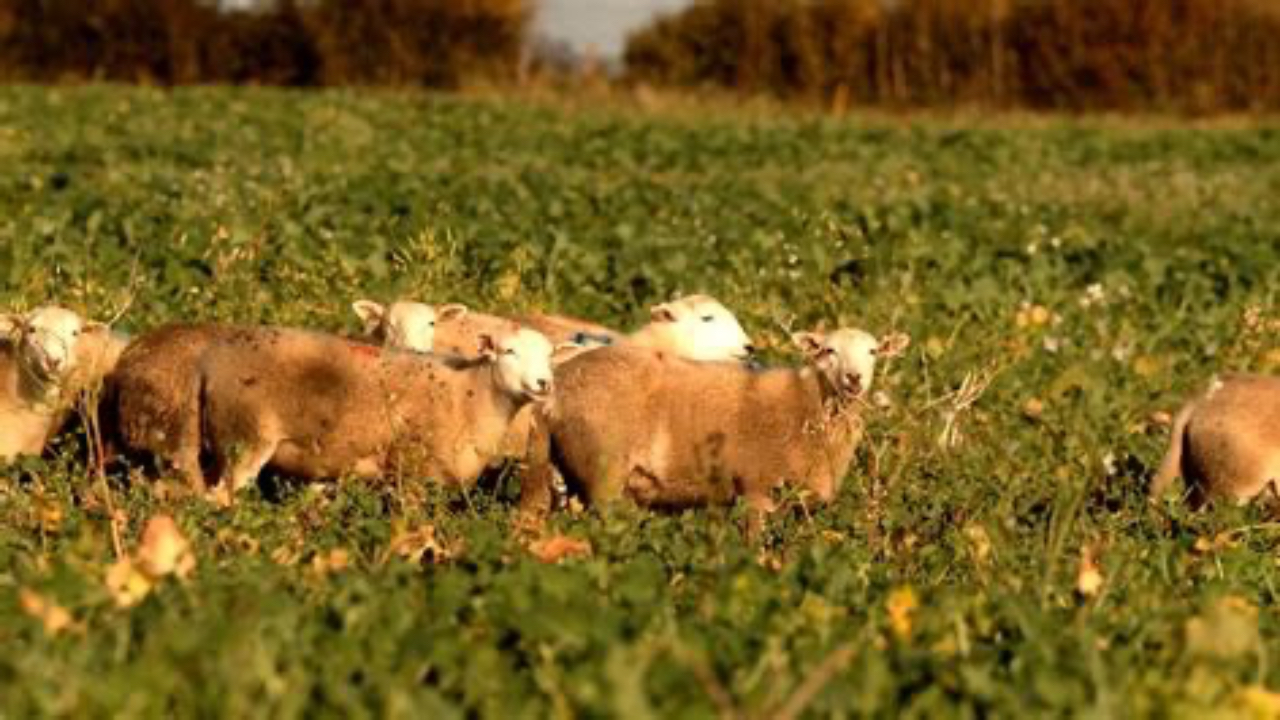
These lambs from my gourmet ewes (as I began to call them) would top the market every time. The same lambs if kept for reproduction were everything you could wish for in a low input, grass-based business.There simply is no trade off. These sheep are what we need in the 21st century to fill ethnic markets and to do so in the cheapest, most practical way - grassfed.
In the meantime I enjoyed easy sales of my larger frame sheep to conventional producers. They will listen to everything I say about low input production and meeting market demand of lambs well finished at light weight. They agree with me and then they still choose the bigger, late maturing sheep.
Folks, you don’t need a 150-170lb ewe to do the job. You simply end up throwing away a lot of grass. The 120 pounds is plenty big enough. She should be thick, deep, short legged and yet refined, and have lots of gut capacity. All that equals maternal to the core.
Breed is not important - consistency of type is. No need of a terminal sire to stop the market. Ironically unlike the cattle industry, it all comes in the same package.
I’ve also found the bigger ewes to be much harder keepers. I realize they’re still a lot smaller than the wooled breeds of yesteryear, but if you can take that first step to hair sheep, go a little further and produce what the market actually wants. It’s more profitable on both ends. ■
Abram Bowerman raises sheep in Spickard, Missouri. He can be contacted at 543 NE 90th Street, Spickard, MO 64679.
Stay connected with news and updates!
Join our mailing list to receive the latest news and updates from our team.
Don't worry, your information will not be shared.
We hate SPAM. We will never sell your information, for any reason.