Start Your Farm with Bottle Calves By Brandon Mitchel
WAYNESBORO, Tennessee
There are always new farmers starting out. Some are eight and some are 80. The question many ask is, where should I begin?
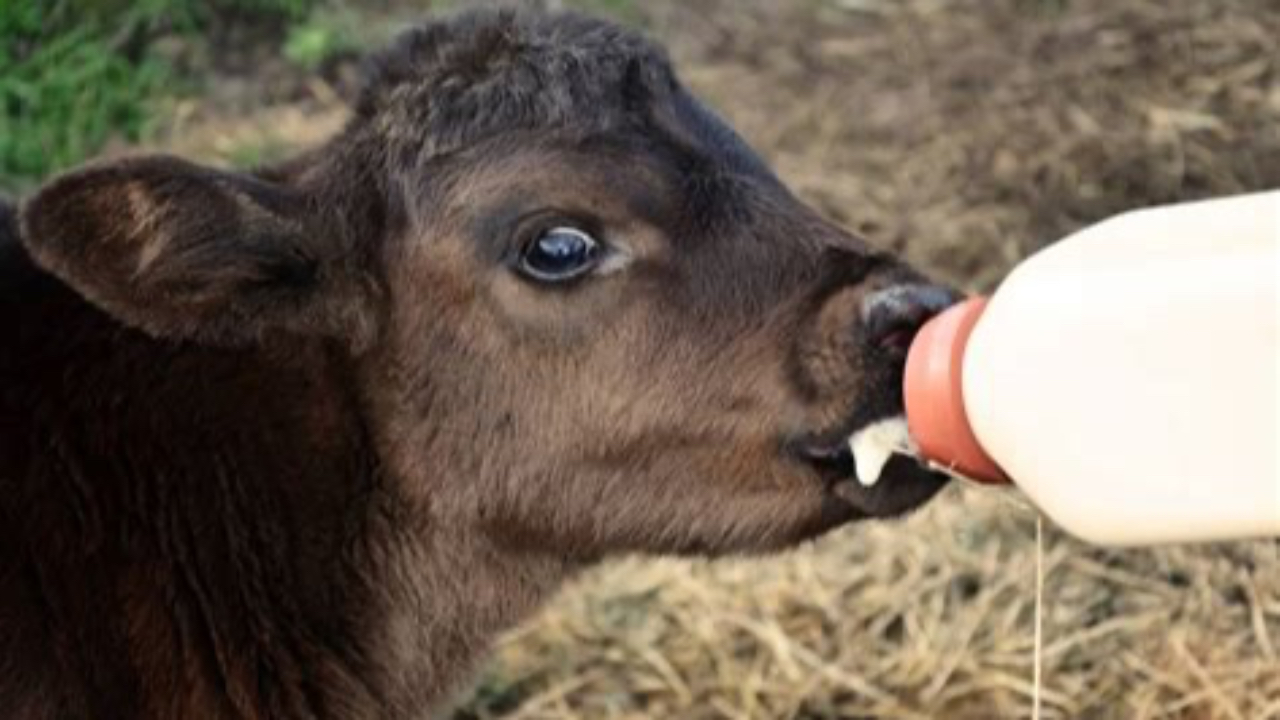
If you’re short on cash, don’t have much land, or don’t have handling facilities and equipment, let me suggest bottle calves.
It seems that almost everyone in my area thinks that to be a livestock farmer, you either run a cow-calf herd, or you go and buy a pasture full of stocker cattle. Those can be two great options, but they aren’t the only ones available. I believe that bottle calves are an untapped resource for a 4-H or FFA student, someone with limited land, a new farmer on a strict budget, or someone who thinks they want to farm, but doesn’t want to invest thousands on a startup. Here’s why.
First and foremost is cost. Newborn dairy calves, at least bull calves, hover somewhere around the $100 mark in my area, depending on the current market. But there are other costs associated with cattle that can be eliminated, at least in the beginning with bottle calves. A newborn dairy calf can be man-handled, so there isn’t a need for expensive handling systems. And a few small calves don’t need as large of an area for grazing (once weaned), so your fencing costs are lower than with a large herd startup.
Another reason bottle calves are a great starting place is because they require your time (but not too much). Spending time with calves helps you develop a good eye for spotting prob- lems. You’ll be able to tell a difference in a calf’s behavior quicker than if you just glance at the herd as you do your afternoon watering or pasture moves. There are some farmers I’ve known who don’t spot a problem until a cow has all four legs sticking straight up.
Bottle calves are also great for kids. Whether you are a kid, or you have some of your own, bottle calves are a great place to start. They are cute, so kids like to be around them. They’re also safe. That’s not something you can really say about older cattle. Kids like to get outside and feed or pet them. That’s time better spent than in front of the TV.
Raising bottle calves teaches responsibility. Let your kids buy a calf with their savings and help them raise it. Don’t expect them to do everything themselves (especially preteens). If you do, you may just cure them of this “crazy idea” that they want to farm. Use it as teaching and bonding time. When the calves are sold, give them their savings back and a share (or all) of the profit.
Bottle calves are great for the retired farmer. If you haven’t got what it takes to grind it out as a full-time farmer anymore, but you don’t want to give it up completely, bottle calves are a great way to hang on to some- thing you enjoy, while being easier on you physically. Even if you’ve never raised cattle, retirement ranching could be great hobby with a pair of dairy calves and a small plot of land. If nothing else, it can be a way to keep active.
Bottle calves get you “in the game.” When I was just starting out, I didn’t have the money for a small herd of cows, or even a group of stockers. Instead of trying to get a loan, I purchased a few bottle calves. I bought more when I had the money, and added six more over the next few months. When the calves were ready to sell, I had enough to turn around and purchase a couple of bred cows.
As I mentioned earlier, bottle calves don’t require a lot of land. They also don’t beat up your ground as much as older cattle. By that, I mean they are delicate grazers. A 200 pound calf isn’t nearly as hard on pasture as a group of heavy stockers are. They are light grazers, maybe down the stand by one-third. That leaves a lot left for photosynthesis and regrowth.
You don’t need a bull, or bull-proof fence. This is an advantage of all stocker cattle. However, the stockers you first start as bottle calves have been around you since they were essentially born. If you purchase stockers, you can go out and find some “squirrely” calves that will test your fences and your patience.
Lastly, bottle calves create cash flow. By far, the biggest input on bottle calves is the milk replacer. Beyond that, it’s mostly grass management. That means your cash inputs are limited. And you can get your cash back fairly quick. Depending on your management goals, you can cash a check in about six months (or thereabout). If you buy open or bred heifers, you may not see any kind of cash flow (except the cash flowing out) for up to eighteen months. While you may not want to start new groups of bottle calves during some parts of the year, theoretically you could get a turn around on three groups of bottle calves in the same time frame as a group of bred heifers. If you start a cow-calf herd with weaned heifers, you may not see a dime for two years.
Are bottle calves for everyone? No. But there are some real advantages to raising them, especially if you’re starting a new farming career, or just want- ing to hang on for a few more years. Bottle calves are great for kids. They make a good 4-H or FFA project. They are safer and require fewer inputs, such as land and equipment, than larger cows. They’re a great way to start a stocker operation with a quick turnaround. And you don’t have to start with a pile of cash or a pile of debt.
Brandon Mitchell has worked as an extension agent, and now an agricultural teacher. Email him at brandon_13@yahoo.com
Stay connected with news and updates!
Join our mailing list to receive the latest news and updates from our team.
Don't worry, your information will not be shared.
We hate SPAM. We will never sell your information, for any reason.