Selecting Profitable Genetics By Allen R Williams, Ph.D.
STARKVILLE, Mississippi
There are two primary keys to profitability in beef cattle: genetics and management.
Within genetics we must consider genotype, phenotype, and epi-genetics. Within management input costs are critical. In reference to these two keys to profitability, there are really four crucial traits that ultimately determine profitability: Longevity, Adaptability, Fertility, and Soundness.
All the individual traits that many have used for genetic selection for decades, such as weaning weight, yearling weight, ribeye area, marbling, milking ability, and the like, only confuse and confound people. I am not saying these individual traits don’t have value, but if you focus your genetic selection on the four crucial traits you will be profitable year after year.
The number one input cost, by far, is the groceries those cattle eat. This includes the grass they graze, the hay fed, and supplements fed. In 15 years of analyzing IRM SPA data from real farms and ranches, it became apparent that what cattle eat on an annual basis comprises anywhere from 65% to more than 85% of their total annual maintenance costs. Considering this, it should stand to reason that one of the most important considerations in selecting cattle genetics is on traits that most determine efficiency on grass.
LONGEVITY
Another fact that is revealed from years of IRM SPA data is that most beef cows in the USA only have between four and five calves in their lifetime before they are culled for any reason. This includes heifers that fail to breed or to rebreed, or are culled for any other reason after that. However, economic analysis shows that it takes about five calves before the average beef cow breaks even on your investment in her. Therefore, the average beef cow never pays for your investment. For ultimate profitability you need 8+ calves per cow.
What determines longevity? The other three crucial traits I listed, such as adaptability, fertility, and soundness, along with your own management and epigenetic factors. Longevity starts in the womb. What your cows are fed during gestation, how you manage their grazing and supplementation, the bulls they are bred to all partially determine the future longevity of the calves they give birth to.
EPIGENETICS
The way you graze has an impact on longevity. Sound mouths are critical to the longevity of a cow. A broken mouth cow or smooth mouth cow has a much harder time meet- ing her nutritional requirements needed for breed back and lactation. Consistently grazing too low wears down teeth much faster and makes old cows out of middle-aged cows. I have witnessed time and again veteri- narians mouth cows that were 15, 18 or even 20 years old and call them an 8- or 10-year old. They are so used to a cow’s teeth being worn down by that age that they cannot believe a cow much older can have a solid mouth.
If cows are not well-adapted to your environment, then they will not achieve longevity. If they are not highly fertile and miss rebreeding they do not have longevity. If they are unsound about the feet, legs, or udder they do not possess the traits necessary for longevity.
ADAPTABILITY
One of the most common mistakes many make is selecting sire or replacement heifer genetics from regions that have a different environment or are from breeders that manage very differently than you. Cattle that are not adapted will experience subpar performance for a year or two, or may never perform as well as cattle that were born and raised in your type of environment.
We often think of adaptation to your climate (hot and humid, cold, hot and dry, etc.) as being the primary factor in selecting cattle that will work on our farms. However, there are several forms of adaptation that must be considered. These include adaptation to your forage species, the dry matter composition of those forages, the supplements you routinely use, your daily management, your water sources, shade access, supplemental feedstuffs, timing of calving and breeding season, and numerous other factors.
Adaptation begins in utero as the environmental influences circulating through that maternal-fetal blood exchange create a host of lifelong epigenetic impacts. What you feed matters. How you graze matters. Your minerals matter. How frequently you move the cattle matters. Your climate matters. Your forages matter, especially the diversity of plant species present. Your soil health status matters. All these variables and many more will determine adaptability from conception forward, they greatly influence longevity.
FERTILITY
Fertility is fundamental to economic success in a cow-calf operation. Without this you simply have a grass-eating machine that produces no return on your investment. In my opinion (and backed up by years of economic data) a beef heifer needs to calve first at two years of age and every year after that. I understand there are advocates for not calving until a heifer is three years of age, but that has never paid the bills on our farm.
The truth is we do not have any issues with getting heifers to breed at 14-16 months of age to calve at two years. This is accomplished without supplemental feedstuffs on good grazing management only. Since we also grass finish, our heifer selection program is streamlined. It consists of exposing every heifer to breeding at 14-16 months of age for about 45 days. Thirty to forty days after bulls are removed, we ultrasound pregnancy check. Those that are bred just bought a ticket to the cow herd and those that are open go in with the finishing herd. No second chances.
Years ago, as both a professor at the university and a cattle producer, I went through all kinds of gyrations to select replacement heifers. This included examining their EPDs, performing reproductive tract scores and pelvic area measurements, pondering over their growth performance data, doing hip height measurements and other linear measurements. The truth is I was outsmarting myself and spending a lot of time on something that produced little return. Exposing everything to breeding with a short breeding window has worked far bet- ter and I spend less time and money fretting over things.
Once a heifer has tested pregnant, she gets put in with the mature cow herd and stays there the rest of her life. I quit maintaining a separate heifer herd for calving. That solved the vast majority of calving related issues such as abnormal presentations and the need to assist in birth.
Never make excuses for a cow not rebreeding or not producing a live calf at weaning. Do not say, “That was really my fault and I need to give her another chance.” If they are all treat- ed the same within the same herd, they all have equal opportunity. If she fails to deliver that live calf at wean- ing, she needs to be culled. A fertile cow does not fail in that capacity. You do not want to inadvertently propa- gate infertility in your herd.
SOUNDNESS
Cows and bulls will not exhibit longevity if they are not sound. What comprises soundness? Certainly feet and legs, but also udder or testicular soundness matters, along with soundness of the eyes and the teeth and overall skeletal or structural soundness. Bulls should be quite masculine in appearance and cows should be very feminine in appearance. If your cattle break down in any of these areas they cannot possess longevity. Bulls that have structural issues will eventually break down as they mature and get heavier. Soundness in testicular circumference, length, and orientation is crucial. Good eyes and ability to travel are essential, as is a solid mouth. Likewise, cows should exhibit soundness about the feet and legs, excellent udder structure and attachment with small, well-spaced teats. She should have good length from hooks to pins, and adequate width between from pin to pin. Good eyes and a good mouth are important for her as well.
SUMMARY
All these items and much more are discussed in detail at SGF’s Grass & Genetics School. More than 30 years of data will be presented to validate selection for the proper phenotype. Linebreeding and Epigenetics will be extensively covered with emphasis on how to implement an effective linebreeding program and how to use knowledge of epigenetics to create a problem-free herd that thrives in your environment. Plenty of discussion time will be built in so we can discuss facts vs myths in cattle selection and what comprises financially profitable genetics.
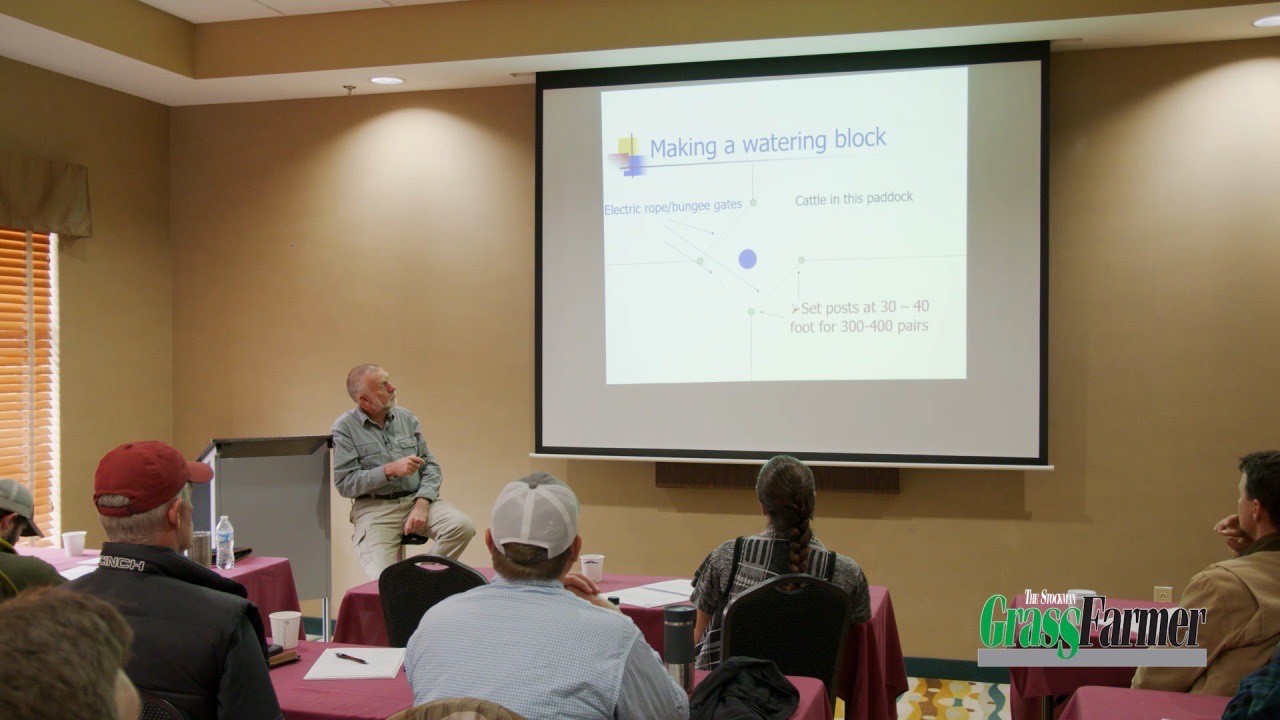
Allen Williams is president of Grass Fed Insights, LLC and one of the founding partners in Soil Health Consulting, LLC, Understanding Ag, LLC, and a partner in Joyce Farms, Inc. He is also a 6th generation family farmer. He can be reached at allenwilliams@joyce-farms.com or 662-312-6826. He led the Stockman Grass Farmer Grass & Genetics School that is available streaming and on a DVD set.
Stay connected with news and updates!
Join our mailing list to receive the latest news and updates from our team.
Don't worry, your information will not be shared.
We hate SPAM. We will never sell your information, for any reason.