Legumes in the Grazing System: Building Profit from the Soil Up By Russ Wilson
TIONESTA, Pennsylvania
On my farm, legumes are not just something nice to see in the pasture. They are one of the most valuable tools we have for boosting profitability and resilience.
Clover, Alfalfa, Birdsfoot Trefoil, and a few others are doing work below ground and inside the rumen that no piece of equipment or purchased prod- uct can match. As input costs keep climbing and weather keeps shifting, I have learned there is real power in letting biology do the heavy lifting.
The biggest job legumes perform is nitrogen fixation. Instead of hauling and spreading fertilizer, I let rhizobia bacteria handle it. These microbes form a partnership with legumes that cre- ate root nodules that convert nitrogen from the air into a form that plants can actually use. When I maintain around 30 to 40% legumes in a pasture, I am effectively getting the equivalent of 100 to more than 250 pounds of nitrogen per acre every year, and it is coming straight from the sky. Nitrogen that drives grass growth also improves for- age quality and feeds soil life without costing me a nickel. A healthy stand of legumes turns the entire pasture into a free fertilizer factory.
It is not just about feeding the grass. Legumes are the nutritional upgrade that keeps livestock gains headed in the right direction. They pack more protein and energy than grasses alone, and they also bring more calcium and magnesium to the table. On my place, when legumes are strong, I see faster weight gains in finishing stock, better milk components, better fertility and healthier animals across the board. Because they are getting that nutrition from grazing, instead of a bag or a bin, I am not spending money on protein supplements. Legumes help me convert sunlight into meat and milk more efficiently and at a lower cost. That is the kind of economics I like.
Now, whenever I bring up legumes, somebody mentions bloat. Yes, it is real, but it is also manageable and, in most cases, it is a problem created by poor grazing decisions, not by the plant itself. If animals go into a lush legume stand completely empty, or if they are allowed to cherry-pick the highest-protein plants without any fiber to balance it, the rumen can get out of sync. Smart management solves that.
I keep minerals available at all times. I avoid turning hungry animals loose into fresh clover after a long night. I use controlled grazing to regulate intake. For those who want zero bloat risk, Birdsfoot Trefoil and Sainfoin are terrific options that main- tain quality even in the heat of summer. Legumes are not the problem; mismanagement is.
Legumes also shine when the weather turns against us. I farm in a region where we swing from wet springs to dry summers. Having deep-rooted legumes in the mix helps keep us grazing longer. Alfalfa and Sainfoin can pull moisture from deep in the soil when grasses are struggling. Birdsfoot Trefoil keeps its quality when everything else starts to look tired. Those added grazing days make a major difference. Every day the animals are harvesting their own feed instead of eating hay is a win because hay is one of the most expensive feeds we make.
Just as importantly, legumes help build the kind of soil that can carry productivity forward for years to come. Their roots contribute to soil organic matter and improve aggregation, so water goes into the ground instead of running off. More organic matter means better water-holding capacity. Healthy biology means more consistent nutrient cycling. With legumes pumping carbon and nitrogen into the soil, earthworms, microbes, and fungi respond. The soil stays covered, the water stays where it falls, and the whole pasture system becomes more efficient.
I do not expect one legume to do everything. White clover hangs tough under heavy grazing. Red clover gives me a high-yield boost, but needs reseeding every few years. Alfalfa brings deep roots and drought tolerance, but it wants respect during recovery. Birdsfoot Trefoil is the one I rely on to carry quality later into the season while avoiding bloat. I have learned to match the species to the soilandtothejobIwantittodo.
Adding legumes into an existing grass stand does not always require a drill or a major renovation. I have had good success seeding with live- stock and with opening up the canopy through grazing so sunlight can hit the ground. The key is to reduce competition early. Then managing it like I actually want the legumes to stick around. That means respecting plant recovery and maintaining a soil pH. If you graze legumes off too short, too often, they will leave, and it is not their fault.
When I look at the numbers, the cumulative benefits of legumes are undeniable. I buy less fertilizer. I buy less feed. My animals perform better. My grazing season stretches longer. Year after year, the soil becomes more capable of supporting the next generation of forage. Legumes are giving me multiple profit streams at the same time. They make the entire system more resilient and more responsive, even during the years that test us.
I think the future of profitable grazing lies in shifting more of the work-load back to biology. We will never see a day when synthetic inputs get cheaper or weather gets more predictable. But as graziers, we have an incredible advantage: grass and legumes grow for free powered by sunlight, water, and carbon dioxide. If we manage them well, we can let nature handle the expenses.
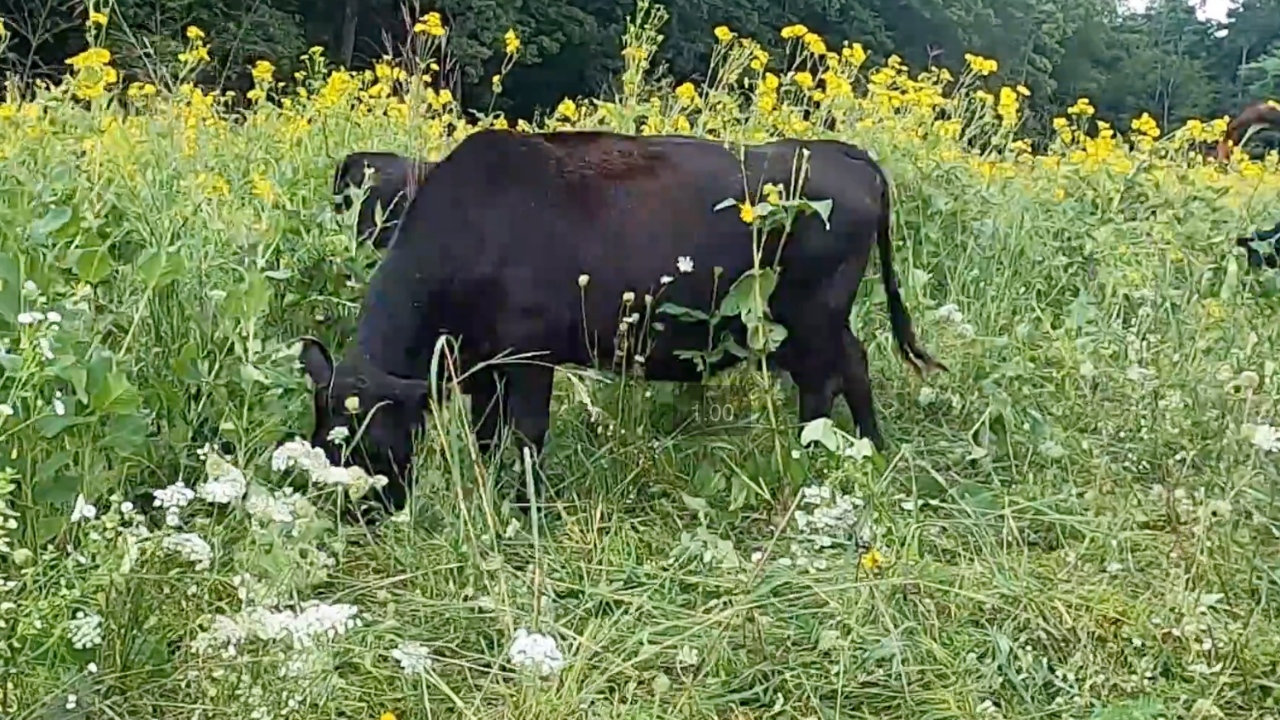
When I see white clover blossoms spreading across a paddock or cattle contentedly grazing a mix that includes Trefoil, I do not just see a pretty pas- ture. I see a system that is paying its own bills. I see nitrogen coming from the air, not a fertilizer truck. I see gains and milk happening from forage, not supplements. And I see soil that will be better tomorrow than it was yesterday. Legumes are not just another forage species. They are partners in the business and it is hard to find employees that work this hard for free.
Graze like tomorrow matters because it does.
MY TOP 5 MANAGEMENT TIPS FOR LEGUMES:
- Manage recovery, not height.
Legumes need time to rebuild roots and recharge nodules after grazing. If I focus only on top growth, I will lose them. A proper rest period even if it looks “messy” for a week is what keeps legumes in the stand year after year.
- Don’t let grasses bully them.
Legumes disappear when they get shaded out. I use strategic grazing or clipping to open the canopy and let sunlight reach the soil surface, especially during establishment or cooler months when clover wants to run.
- Keep the rumen happy to prevent bloat.
Legumes are not the issue. Rumen stability is. I never turn hungry animals into lush legume pad- docks. Controlled grazing and easy access to minerals keep animals safe and performance high.
- Prioritize inoculation and seed-to-soil contact.
If the right rhizobia are not there on day one, legumes cannot fix nitrogen. I always inoculate legume seeds and make sure they have tight contact with the soil so nodulation starts fast and strong.
- Use diversity to spread risk.
No single legume can handle every stress. White clover handles pressure, red clover pumps yield, Birdsfoot Trefoil holds quality in the heat, and Alfalfa stretches roots deep. A diverse stand means something is always working for me.
Russ Wilson owns and manages a 220-acre adaptive grazing system, where livestock are pastured over 300 days yearly. With over 40 years experience, he has learned how proper forage management and species diversity can pay dividends for livestock production and soil health using a low-input and skillful management approach to make sure the farm delivers profitability. Visit Russ at www.russwilson.net, Facebook, YouTube.
Stay connected with news and updates!
Join our mailing list to receive the latest news and updates from our team.
Don't worry, your information will not be shared.
We hate SPAM. We will never sell your information, for any reason.