Integrating Crops and Grazing Using Cover Crops By Heather Smith Thomas
SEVERY, Kansas
Kansas farmer Gail Fuller of Circle 7 Farm experimented with no-till farming on and off during the 1980s.
“Because of ignorance and being too proud to ask for advice, we failed most of the time. In the mid-1990s I was very frustrated and tired of erosion issues. I then went completely no-till, and the erosion didn’t get better, and in some places got worse. I wanted to blame the no-till methods but in reality the erosion was actually due to mis- management,” said Fuller.
“I realized we did not change our crop rotations enough. I had tried to simply make our traditional rotation practices fit our no-till, which at that time was corn and soybeans. Most of the corn was chopped for silage. We were fol- lowing corn with soybeans so there was no residue, no carbon added to the soil. The erosion just got worse,” he said.
Then he attended a conference called No-Till on the Plains, in the late 1990s. “They were talking about cover crops. I tried those for a couple of years, but probably didn’t have my heart in it all the way and didn’t try to understand it. There was no one that I knew of doing it at that time. Then we had a severe drought in 2000 and no income. The first thing that got dropped was the cover crops,” he said.
“We not only went back to what we were doing earlier, but also had to bale up most of our soybeans that year to keep the bank happy. That was an ‘aha’ moment for me. We had continued drought for the next two or three years, and our yields slowly declined and the ero- sion got worse again. That’s when it dawned on me that we’d actually been headed the right direction with the cover crops. Instead of taking things out of rotation, we needed to be adding things into it,” said Fuller.
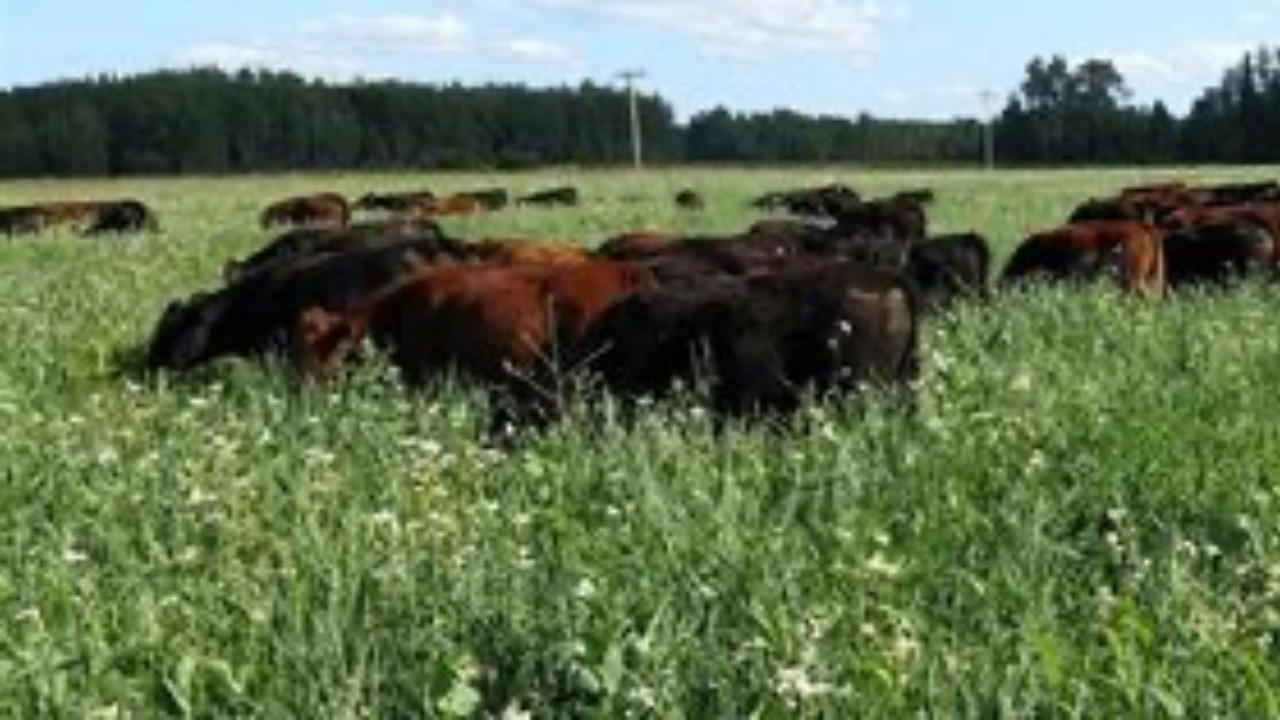
In 2003-2004 he went back to cover cropping. “Only this time, instead of using a monoculture we used mixes trying to imitate what Mother Nature does. It didn’t take very long to see improvement, and when I started over the second time I started much smaller, with a few plots around the farm that were right next to our feedlot. It didn’t take a rocket scientist to quickly realize there was a lot of good, cheap forage there. We traded some corn for some cows and started grazing those cover crops,” he said.
“I was scared to death, because most of these things we were using as cover crops I’d never heard of before, let alone knew anything about feeding them to cattle, and didn’t know what it would do to the cow. But that’s how we got started. From there, it just exploded,” Fuller said.
“We started grazing those cover crops, and went to more conferences and listened to people like Dave Morell, Gabe Brown, Neil Dennis, Ken Miller, Doug Peterson, Jim Gerrish and Greg Judy. They were using mob grazing and talking holistically and this really intrigued me. I thought I was doing intensive rotational grazing because we were moving the cows every two to four weeks, but I soon realized I needed to speed it up. I was just in kindergarten.
“Everything we do now, we think it through holistically, whether it’s the farming side, the cattle side, etc. I want this kind of interaction and I want the cattle on all the acres I can get them on at least every two or three years. I want cattle to go across a field at least once,” Fuller said.
He followed the cover crops with two- and three-way mixes and quickly realized that wasn’t nearly enough. “Now most of our mixes are at least 15 to 20 way. We are trying to imitate the native system, and for us it’s the tall grass prairie. We want as many plants in our mix as we have on the prairie forbs, legumes and grasses.”
Agriculture in recent years has moved too far away from a natural system, and people now have to re-learn the things that work. “We’ve forgotten a lot of earlier wisdom and the sad part is how fast we’ve forgotten. We are not inventing the wheel; it’s all been done before. With the exception of mob grazing, most of what we are trying to learn today is what grand-pa or great-grandpa did. They used cover crops to grow their legumes and to feed cattle,” said Fuller. Livestock were used extensively to keep the soil fertile and productive, before the days of chemical fertilizers, and before farmers were taught about the benefits of monocultures at the agricultural schools.
“I am very disappointed in our universities. I understand that what they teach and the things they research are driven by dollars, and they don’t get dollars from farmers. They get dollars from big companies that need research done. The ag schools are no longer about providing research for farmers. They are just chasing dollars, and this is sad.” Many young farmers/ ranchers are being led down the wrong path.
The kids coming out of the university system today don’t under- stand many basic truths about the best ways to manage land and live- stock. “I can’t blame them, because they come home from university and look at me out there moving fence by hand and doing all these things that look like a lot of work. Their dad just bought a new com- bine and two new semis and rented another section of land, so which system looks like more fun to a 20-year-old kid?” asked Fuller. The sad thing about “modern” agriculture is that the farmer or rancher has to keep expanding or try to produce more, just to break even or pay the bank.
Heather Smith Thomas ranches in Salmon, Idaho and is the author of several books including Guide to Raising Beef Cattle, Guide to Raising Horses, and Guide to Training Horses available at heathersmiththomas.blogspot.com
Stay connected with news and updates!
Join our mailing list to receive the latest news and updates from our team.
Don't worry, your information will not be shared.
We hate SPAM. We will never sell your information, for any reason.