Grazing Expert Greg Judy: The Most Important Farm Investment Isn’t What You Think
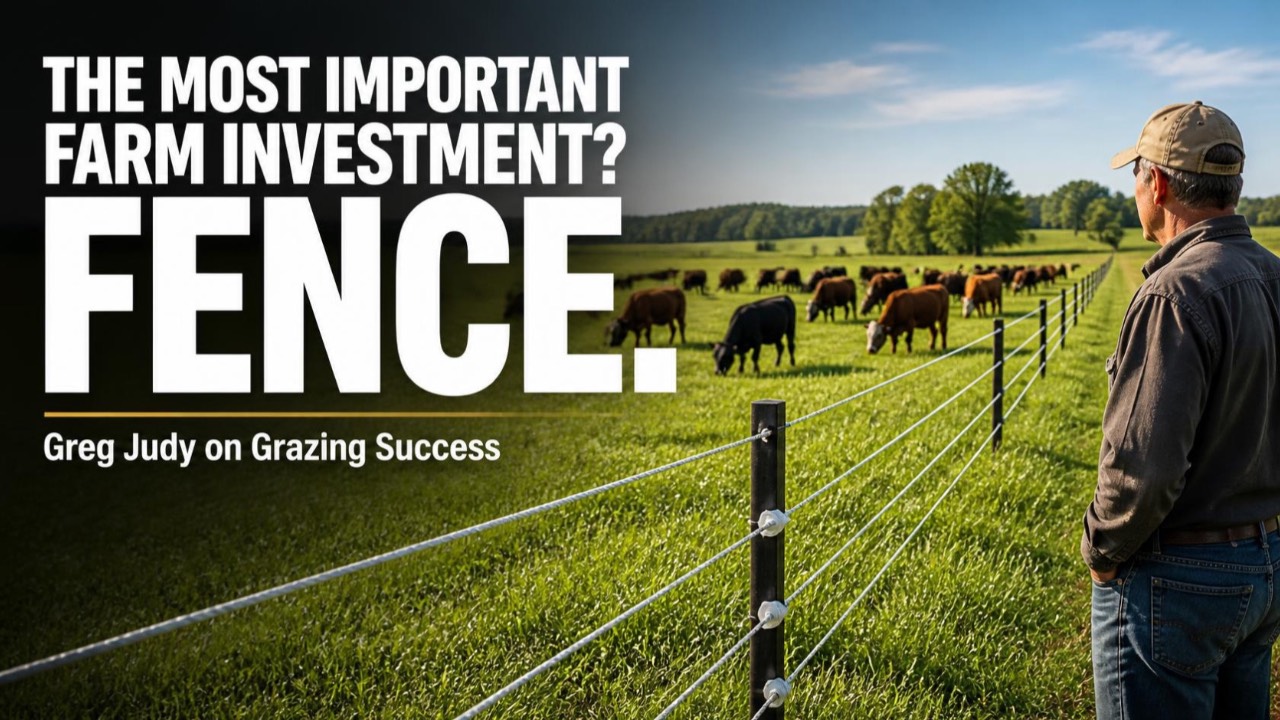
The Most Important Farm Investment? Start With Fence.
What’s the most profitable investment you can make on a grazing operation? According to grazing expert Greg Judy, the answer may not be what you expect: fence.
In this excerpt from Greg’s grazing training, he explains why a good perimeter fence gives you the control needed to manage livestock, protect your forage, and make rotational grazing work. He also covers portable fencing, managing multiple species, choosing the right tools, and why a healthy grazing operation should work more like a natural ecosystem.
This article is transcribed from a video originally shared on the Stockman GrassFarmer YouTube channel, where you can watch the full presentation free of charge.
Click here to watch free SGF videos on YouTube
...
Polywire is not a fence. It's not a permanent fence. It's great for moving cattle, but you can't bring animals onto your farm if all you've got is polywire for your perimeter. You've got to have a fixed fence.
And that can either be multiple strands of high tensile, which is what we use, five to six strands, high tensile wire, electrified. 170,000 psi, don't use aluminum wire. 170,000 psi steel wire, not aluminum.
Deer hit aluminum wire or a cow hits aluminum wire, it's busted. They're gone. Tree falls on it, it's broke. High tensile, it just takes it to the ground. It'll pop right back up. Now, I will give you this.
Aluminum is more conductive, but it has no brake strength at all. It just breaks. So I'm not going to use aluminum. Yeah, so make sure you have a good fence. Water, most people overbuild on water. I've got a whole section on water we're going to talk about.
To graze year-round, you must manage the forage. Sunlight collecting business. That's what we're in. We're in the sunlight collecting business. Don't forget that. You've got to be able to collect it.
And you can't collect it if you don't have any leaves. And if you're not managing that leaf height, you're not going to be able to collect very much solar energy. You're not going to make any money. But you've got to have fence.
I asked Ian once, I said, what's the most profitable thing that you can invest in on your farm? You know what his answer was? Fence, not water, fence. Now you do have to have some water, but cattle can walk.
They said, fence. Fence gives you control where they're at. And if you can't control where those animals are at on your farm, you're not going to have any kind of rotation at all. They're going to be rotating all right freely across your farm.
And now you're out of business. You might as well just sell them because they're going to eat your farm off. It's going to look like this carpet. And they'll do it. It may take them a little while, but they will do it.
So there's solar energy of harvesters. We had a guy come by. He saw those cows on that. There's only about two acres there, and there was about 400 head in there. Oh, gosh, it made him mad. He looked at that.
He says, you're stressing those cows. I'm like, really? They looked pretty stressed. Everything was eating. Everything had a big old gut on it, slick hair coats on them. He said, what you're doing there is wrong.
He said, you need to take up that wire and give him the whole farm. The animals do better, the ground do better, and you'll do better. That's what he told me. And he did it with a serious face. And as he drove off, he had a big round bell stuck on the back of his truck.
And this was in July. He was already feeding hay. He was peeved. Yeah. So that's what you've got to be willing to take. You know, he was trying to intimidate me. And he was an older guy, kind of high in the community.
Everybody thought a lot of him. And he was a bully. I didn't take it. I just said, well, this is what we're doing. This is why we're doing it. And I said, they're not stressed. I said, this is the second time today they've been moved.
And he's like, well, it ain't right. I'm like, okay. So you can't change everybody. You got to have that secure perimeter fence. Paddock divisions. I'm real big about not putting those in on a new farm immediately, not permanent paddock divisions.
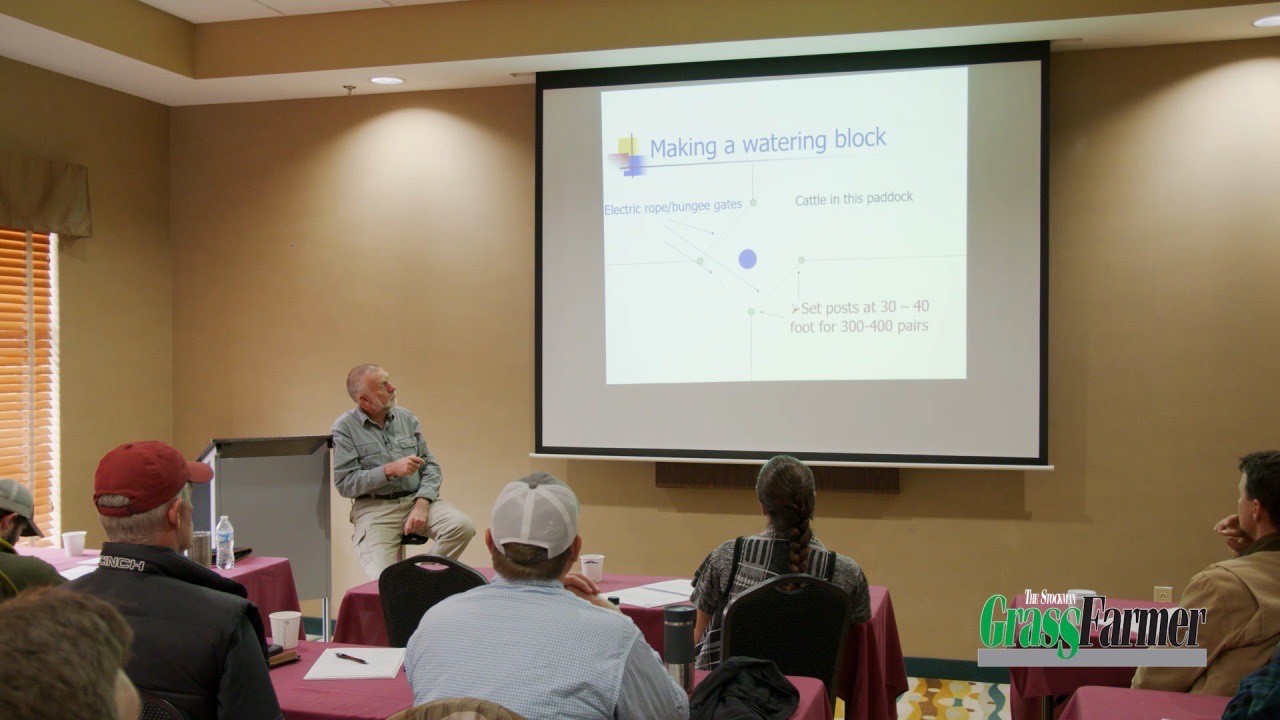
Now, granted, if you've got a huge farm, 1,000 acres, you can't go out to a polywire and go all the way across that and rotate them conveniently. You're going to need to split that up a little bit with some high-tensile paddock divisions, with some water points to do it effectively.
Because if you have to roll up three or four rolls of wire every day to go across that farm, you're going to quit. You're not going to do that. It's going to be too much work. But that's where the portable fencing comes in.
It is very economical. And we're going to talk about the tools, the right tools to use. Folks, this is one that people really get hung up on. I did a consult in Iowa about three months ago, and this guy, he only had two little herds.
He had like 20 cows, and he'd taken the calves off. He had like 20 calves. And it somehow got in his mind of reels, and he had this great big roll of, I think it was poly tape, and it was on this thing.
It looked like it belonged on a highway construction. It must have weighed 150 pounds. He had two of them, one for the stalkers, and one, and he's after packing. He said, it takes me three hours to move them cows.
And he didn't have any permanent wire up anywhere. It was a wreck. And he wasn't moving the cows very fast because it was so much work. He had them in way too tight, covered in flies, laying in manure and mud.
And he'd only grazed 20% of his farm for the whole year. He hadn't even made one rotation yet. Anyway, life is good for him again. He's got the right tools and he's like, he said, I can't believe how dumb I was.
And this was a guy that was very successful in another business and he came back to the farm and he thought he'd be successful in the farm because he's successful in his town job. He didn't have the right tools.
He just didn't know any better. It wasn't that he was dumb. He just didn't know. Just didn't know. There's the pigs as they get bigger. We were running those with one wire. Now those pigs are up there about 120, probably 130 pounds right there.
But they're little guys. I've got to talk on that, how we break them. So additional species, they must be managed. You can't simply throw them all together and expect success. That will be a wreck. Each species must have what they need.
So with pigs, if you're going to throw pigs in with the cattle and there's no shade out there, that's not going to work very well. They're going to suffer in July and August. It's hot and pigs got to have some kind of shade because they don't sweat.
And they can actually die on a really hot summer day in Missouri. They would not do well. They may not die, but they're not going to put any weight on. So if you look at nature, that's what we like to do.
We like to try to mimic what nature is doing. And so the more species is always a good thing. That was in Kruger Park. There was baboons and impalas. And that's just the two that I got right there. There was elephants in there.
There was kudu. There was, we saw some hyenas right down the road from there. There's lion, there's leopards, there's the predators. And when you go through Kruger, they're all in groups. These are animals that are being preyed on.
And they're all together and they're all alarm systems. You know, there's birds up in the trees. Everything's watching those leopards and those lions. Africa is kind of a mess now, but if it ever gets cleared up again over there and you have a chance and you go to South Africa, go to Kruger Park.
It's the only park left in the world that is natural. I mean, there's huge herds, huge herds of buffalo and elephant and the Cape Buffalo. I've never seen so many animals in my life. It's crazy. It's 250 square miles.
It's a huge park. Healthier ecosystem, well-managed multi-species operation, everything is thriving. So you have the domestic animals, you've got the wildlife, the soil, the plants, the water, and you have fish.
That's all in your operation. So if you've got a pond, don't think of it as just a livestock pond. Maybe that's your goal that you built it, but you should also be thinking about fish. Stock the darn thing.
Maybe you can sell those fish. Fishing days, people come out, fish. You need to charge them. Folks, you've got to charge people. You can't let people come onto your farm for free and not charge them.
They don't appreciate it. And Alan Nation was big on that. He always said, you know, people appreciate it when they have to pay a little bit out of their pocket. They're going to pay attention more. A really good example of that is go to a, and I'm not picking on NRCS, but if you go to one of the state-sponsored grazing schools where you just pay for, you don't have to pay anything, maybe $15, and they provide you a meal.
You go out there and look in that audience when you're giving a talk. 20% of the people are asleep. They didn't cost them anything. They just came for the meal. And so they're not paying attention. Nobody's taking notes.
But when you have to pay a little something, you want to get your money value out of that.
...
Stay connected with news and updates!
Join our mailing list to receive the latest news and updates from our team.
Don't worry, your information will not be shared.
We hate SPAM. We will never sell your information, for any reason.