Acabonac Farms on Long Island a Trusted Source of Grassfed Beef by Becky Gillette
LONG ISLAND, New York
Eastern Long Island, located about an hour’s drive from New York City, is a heavily populated urban area.
So, some people are surprised to find this is the home to the 200-acre Acabonac Farms, which has a mission to be a trusted source of local, delicious, grassfed, pasture-finished beef. Acabonac means “root place” in Algonquin.
Owner Stephen Skrenta said demand for their products has skyrocketed since the outbreak of coronavirus, which hit New York City particularly hard.
Stephen started leasing pastures in 2017 after doing a lot of research and figuring out what was required in order to raise grassfed beef in an area that is fairly urban.
“We have to deal with things like moving animals from farm to farm,” he said. “We don’t have 500-acre par- cels available. We have 30-, 40- and 100-acre parcels, so we have to piece together several locations to provide enough pasture for our animals.”
They are not a cow-calf operation. They purchase steers and heifers from a network of cow-calf producers as far north as Vermont and as far south as Tennessee with a focus on the right genetics that allow the animals to perform on an all-grass diet.
“We bring those calves to our finishing farms where we use Management-intensive Grazing, get them to ideal slaughter weight, and have the animal processed,” Stephen said. “We retail the products, half direct to consumers on our website.
It arrives at your house the next day after you order it. That quick delivery is what people expect. The other half of the business is wholesale. A lot of that is working with other local farms that have farm stands that were most- ly vegetables, but now can also offer 100 percent grassfed beef on Eastern Long Island.”
“It is a win-win for all,” Stephen said. “We have an appetite to continue to grow. At first it required working with local farmers, convincing them to lease their land to us, which was difficult because there was little knowledge about livestock out here. Historically there was cattle grazing in this area. We just had to bring it back to this area.”
The realities of living so close to New York City make farming very different. It is new to people and tremendously interesting. While he sees a fair amount of knowledge about the health benefits of grassfed beef, there is also a void of understanding because of confusing labeling proto- cols from the government.
“Many people think they are getting 100 percent grassfed beef when, in most instances, they are not,” Stephen said. “Are they getting what they are paying for? And people often don’t understand what goes into small scale beef production and fail to recognize it is virtually impos- sible to sell a fresh product. They don’t understand the seasonability of grassfed beef. And, if people are only interested in one cut of beef, it makes it hard because we have to sell the entire animal.”
Stephen said one of the best parts of the job is when people have enough interest to come to the farm and see the pastures. Most times they are amazed at what can be done with an electric fence, how healthy and calm the animals are, and how healthy and beautiful the pastures look.
“They are really amazed this can all happen on Eastern Long Island,” he said. “I love working with the animals, but I also like working with the customers and supporting them in their decision to change what they are eating and paying attention to where their food comes from. I like the fact we are making progress regenerating the health of some of these farms we lease, particularly soil health.”
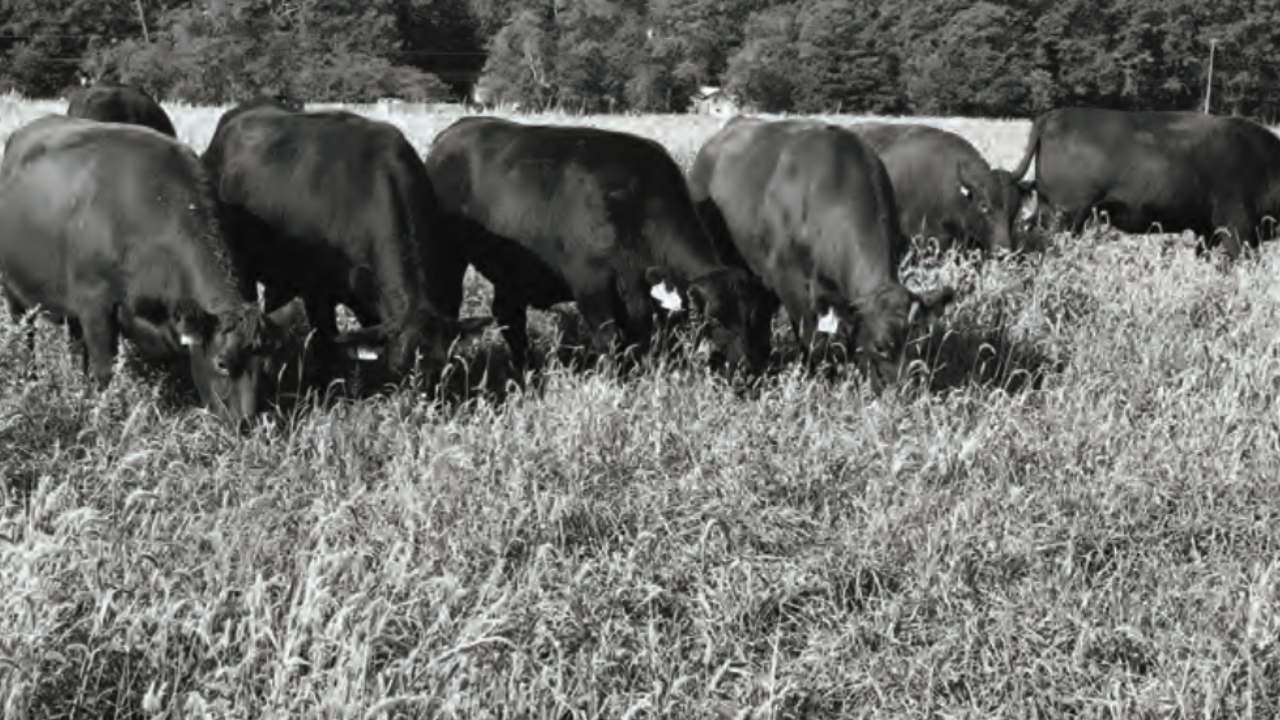
They have a herd of about 100 cattle, and slaughter ten to 20 per month. They use all English breeds including Black and Red Angus, Herefords, and crosses and mixes of those breeds. “We focus on phenotypes,” he said.
Perennial grasses are selected for energy content; the higher the energy, the better. They use perennial rye grass, orchardgrass, and white and red clover. They try to have a pasture mix of 40-50 percent clover.
“That is our perennial mix that tends to do pretty well here,” he said. “We’re trying some mixes of warm- season annuals: sorghum, sun hemp, cow peas, turnips, collards, sunflower and buckwheat. We have had mixed success so far with that. There is a learning curve on that.”
Stephen did a lot of study and attended workshops such as those offered by the Stockman Grass Farmer. They also relied a lot on advice from a few experienced graziers who helped them think through the layout of the farm, the infrastructure, the fencing and stock watering.
“You can spend a lot of money and make mistakes,” he said. “It is good to have the perspective of how things are done in South Africa, Ireland, New Zealand and Australia. We worked with a few mentors who really helped me think through how to plan our farms, what plant mixes would likely work best, could we ever be successful with cow-calfing, labor rates and other issues it is important to get your head around.”
One thing he learned is that selling beef direct to consumers is a completely different business than raising beef. The two have different investment requirements. It takes a lot of hard work developing a retail market for grassfed beef that includes a focus on communication and educa- tion of the customer base.
Stephen said one of his biggest mistakes was thinking that he could raise local grassfed beef and there would be an instant market.
“That isn’t the case. You have to really work at finding, educating and then keeping customers,” Stephen said. “People feel it when customer service is great as opposed to average. Customers demand great customer service. We are constantly working on that. Then we need to have a full product line, and have had to make sure we have beef in stock even during the pandemic, which is not easy to do. We have to make sure UPS and FedEx are getting the products delivered on time.”
“We have functioned beautifully during the pandemic, but have been taking a lot of time in the past several years to build up our customer base and we have a long way to go,” he said. “We are limited in the amount of beef we can produce and sell. So, we have to make sure every pound we sell is through the right channel with the right margin. That is what is needed to continue to farm and expand our farm.”
Stephen said they buy a lot of equipment through American Grazing Lands Services owned by Jim and Dawn Gerrish, and Galen and Amber Gerrish.
“They have great pricing and a lot of knowledge,” Stephen said. “They showed me how to use the equipment. I felt like I had a partner in crime the whole way.”
He named several other favorite products including corrals from All American Panels LLC, Stafix energiz- ers, O’Brien step-in posts and geared reels, Batt-Latch gate openers, and CattleMax Herd software. ■
For more information about Acabonac Farms, call 1-631- 731.2520 or send an email to info@ acabonacfarms.com.
Stay connected with news and updates!
Join our mailing list to receive the latest news and updates from our team.
Don't worry, your information will not be shared.
We hate SPAM. We will never sell your information, for any reason.